



|
Getting your Trinity Audio player ready...
|
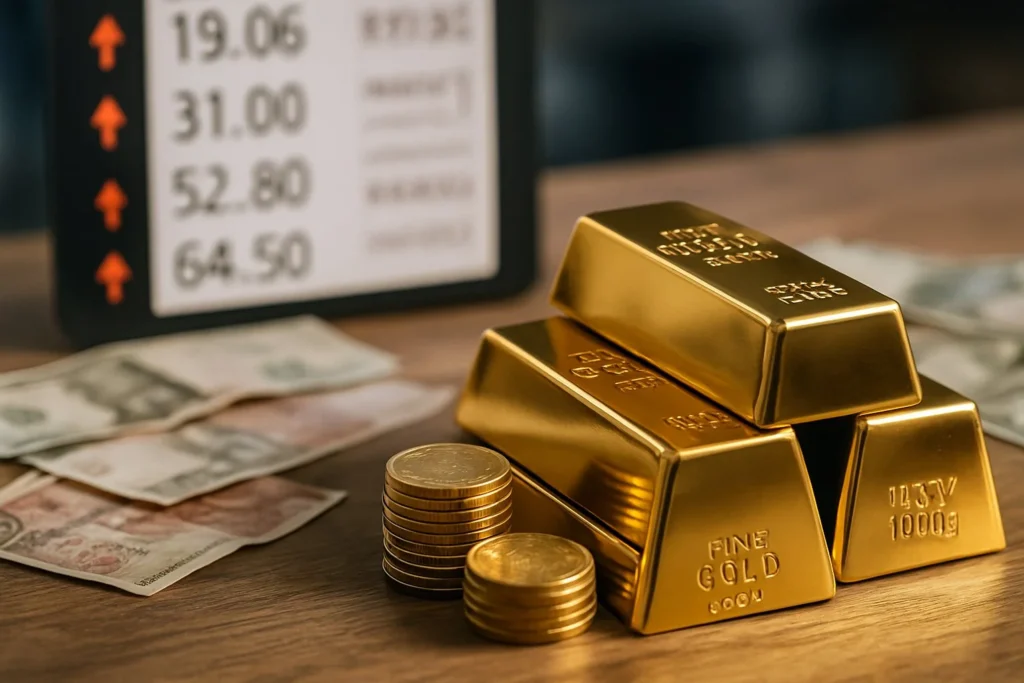
During hyperinflation, paper money can lose value at a terrifying pace. Prices jump so fast that every day, your cash buys less. Gold often holds its value when national currencies collapse, making it a strategic asset in unstable economies. Its independence from any single government or central bank lets it act as a store of value when trust in money disappears. History gives us some powerful examples. In the Weimar Republic, people watched their money become almost worthless between 1921 and 1923, but gold kept its purchasing power. Zimbabwe’s crisis followed a similar pattern. Gold prices surged in local terms as inflation spun out of control.
These moments show how gold can act as a hedge against extreme currency devaluation.
- Hyperinflation can quickly destroy a currency’s value
- Gold has historically maintained purchasing power in such conditions
- Studying past crises helps guide present-day investment decisions
Understanding Hyperinflation and Its Impact on Currencies
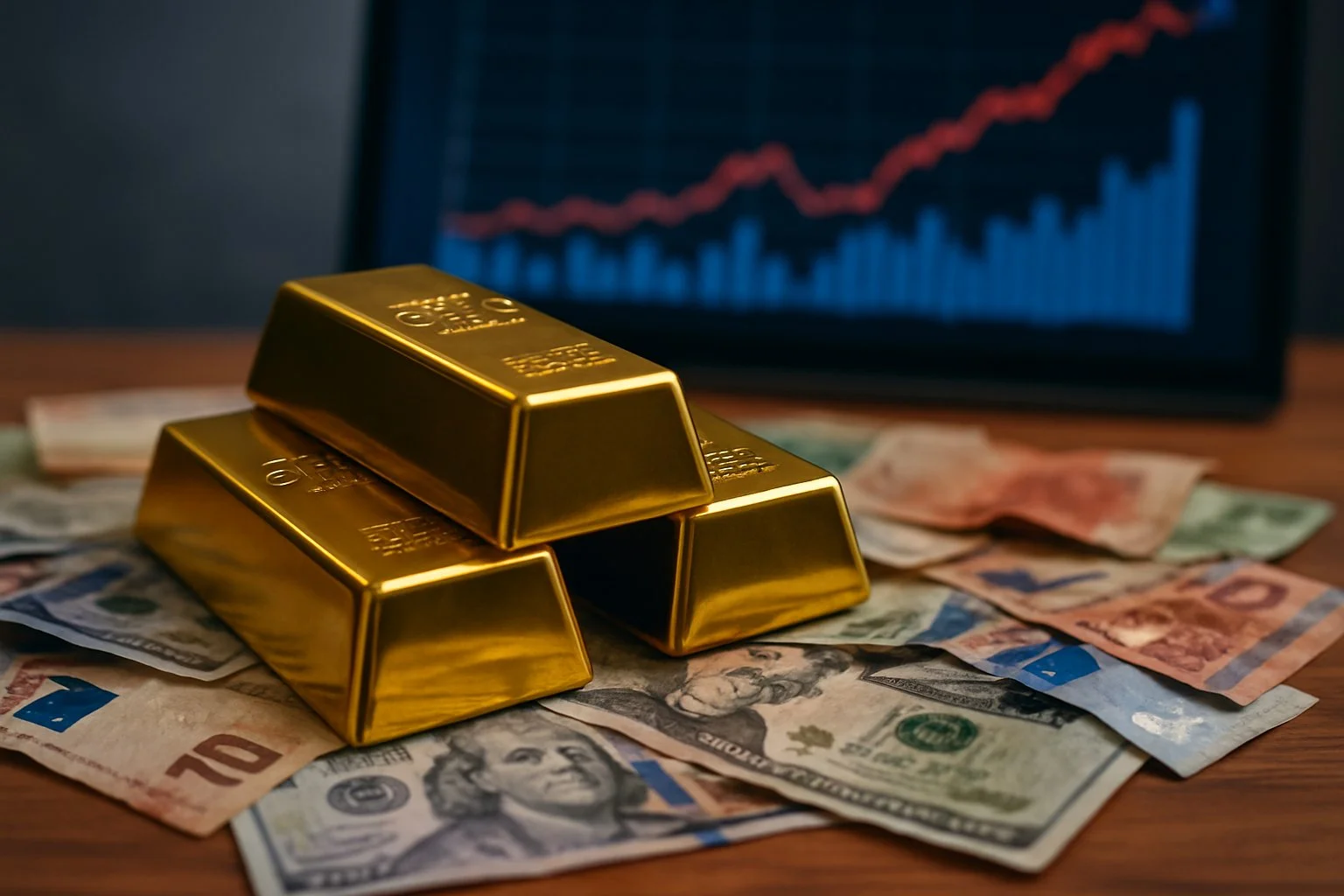
Hyperinflation happens when prices rise at a wild rate—often double or triple digits per month. It slashes the real value of money, disrupts trade, and pushes people to look for alternatives like gold or foreign currency.
Poor fiscal policy, too much money printing, and loss of confidence in the currency usually drive it.
Definition and Causes of Hyperinflation
Hyperinflation is much worse than regular inflation. Economists typically define it as price increases over 50% per month.
It often starts with excessive growth in the money supply that outpaces economic output. When governments print more money to fund spending, each bill loses value.
Political chaos and war can also trigger hyperinflation. Disrupted production and trade shrink the supply of goods, so prices shoot up.
External debt crises sometimes force governments to pay in foreign currency. To cope, they print more of their own money, which just adds fuel to the fire.
When people lose faith in the currency, they rush to spend cash before it loses even more value. This makes the spiral even faster.
Monetary Devaluation and Loss of Purchasing Power
During hyperinflation, monetary devaluation happens fast. The exchange rate against foreign currencies tumbles, and imports get pricier by the day.
This causes a sharp loss of purchasing power. Wages might go up in numbers, but they rarely keep up with prices.
If bread costs 2 units today and 10 next week, your earnings just don’t stretch as far. Savings in local currency melt away just as quickly.
Businesses can’t set prices reliably. Long-term contracts get tricky, if not impossible. People start turning to hard assets like property or gold as a hedge against hyperinflation.
Sometimes, economies fall back on barter or foreign currency for everyday transactions.
Historical Examples of Hyperinflation
The Weimar Republic in Germany (1921–1923) saw prices double every few days. People needed wheelbarrows of banknotes just to buy bread.
In Zimbabwe during the late 2000s, inflation ran into the billions of percent, and the local dollar became worthless.
More recently, Venezuela has endured years of hyperinflation, thanks to falling oil revenues, relentless money printing, and political mess.
A simple table of famous cases:
| Country | Peak Inflation Rate | Period |
|---|---|---|
| Germany | ~29,500% per month | 1923 |
| Zimbabwe | ~79.6 billion% | Nov 2008 |
| Venezuela | >1,000,000% | 2018 |
The Role of Gold During Hyperinflation
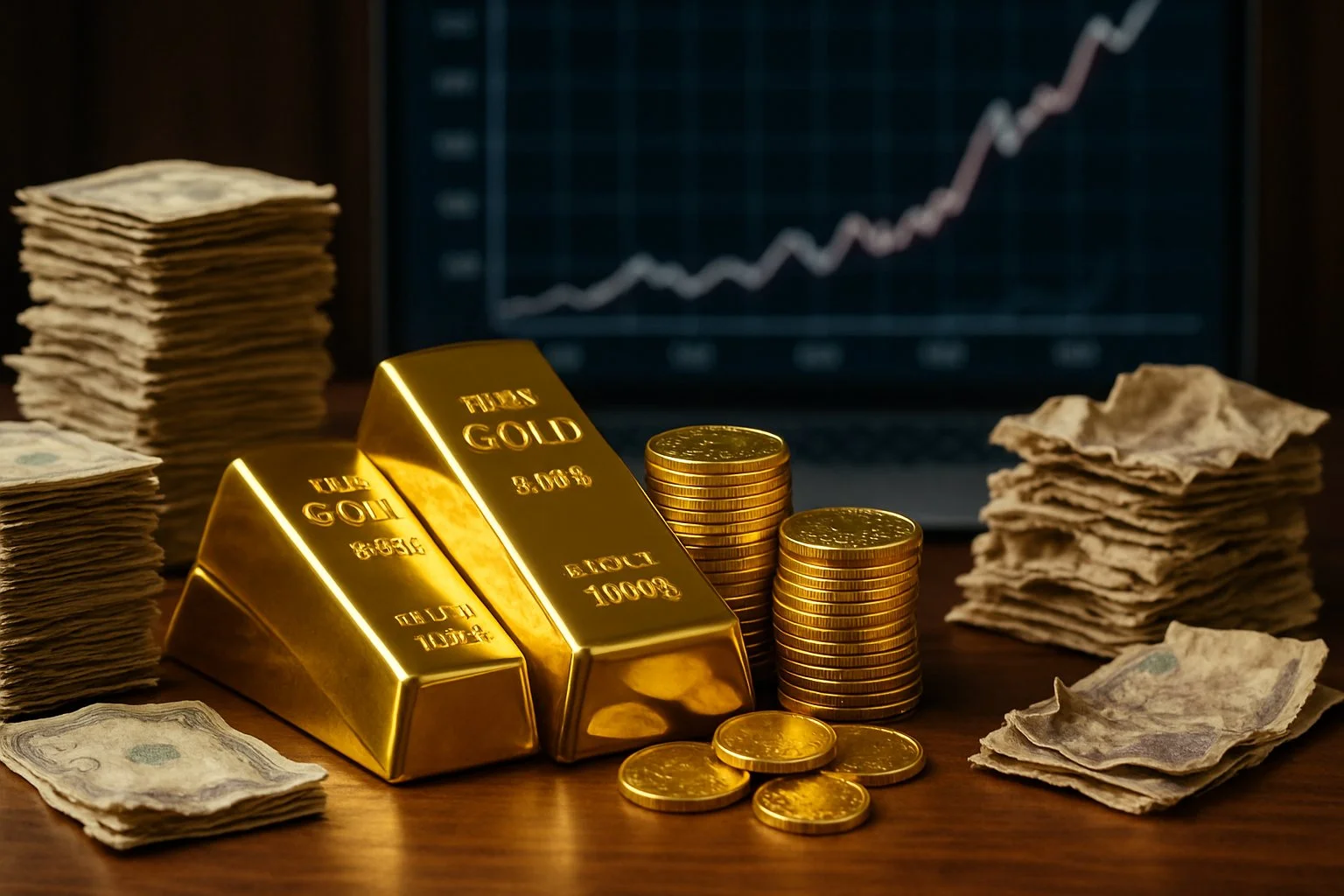
When hyperinflation takes hold, national currencies can nosedive, making it tough to buy even essentials. Gold tends to keep its purchasing power, so it’s a practical choice for preserving wealth when the US dollar or other fiat currencies get shaky.
Gold as a Store of Value
Gold’s reputation as a store of value goes way back. When inflation goes wild, paper money can lose value daily, but gold’s worth stays pretty steady in real terms.
Take the Weimar Republic in the 1920s. The price of gold in local currency soared as the mark collapsed. Anyone with gold could still trade for goods, even as cash became useless.
Unlike paper money, you can’t just print more gold. Its limited supply helps it hold value, even when governments flood the market with currency. That scarcity, plus global demand, makes gold a favorite for people looking to safeguard their purchasing power.
Gold’s Performance Compared to Fiat Currencies
Fiat currencies like the US dollar or Argentine peso can lose ground fast during hyperinflation. Gold prices usually spike in local currency terms—not because gold itself changes, but because the currency tanks.
For instance, in Argentina’s hyperinflation in the 1990s, the peso’s collapse sent gold prices through the roof, letting holders protect their savings. In most hyperinflation episodes, gold beats cash savings, bonds, and sometimes even real estate.
| Asset Type | Typical Performance in Hyperinflation |
|---|---|
| Gold | Retains or increases value |
| Fiat Currency | Rapid loss of value |
| Government Bonds | Often lose value |
| Tangible Goods | Varies by supply and demand |
Mechanisms Behind Gold’s Resilience
Gold’s strength comes from a few key factors. First, it’s a physical asset with no counterparty risk—you don’t have to trust a government or bank to honor its value.
Second, gold trades worldwide in many currencies. When one currency falls, buyers with stronger money can still step in, keeping demand up.
Third, as hyperinflation hits, investors ditch cash for tangible assets. That rush to gold, combined with its limited supply, pushes its price higher in the failing currency. You see this again and again in historical hyperinflation events.
Case Study: Gold in the Weimar Republic
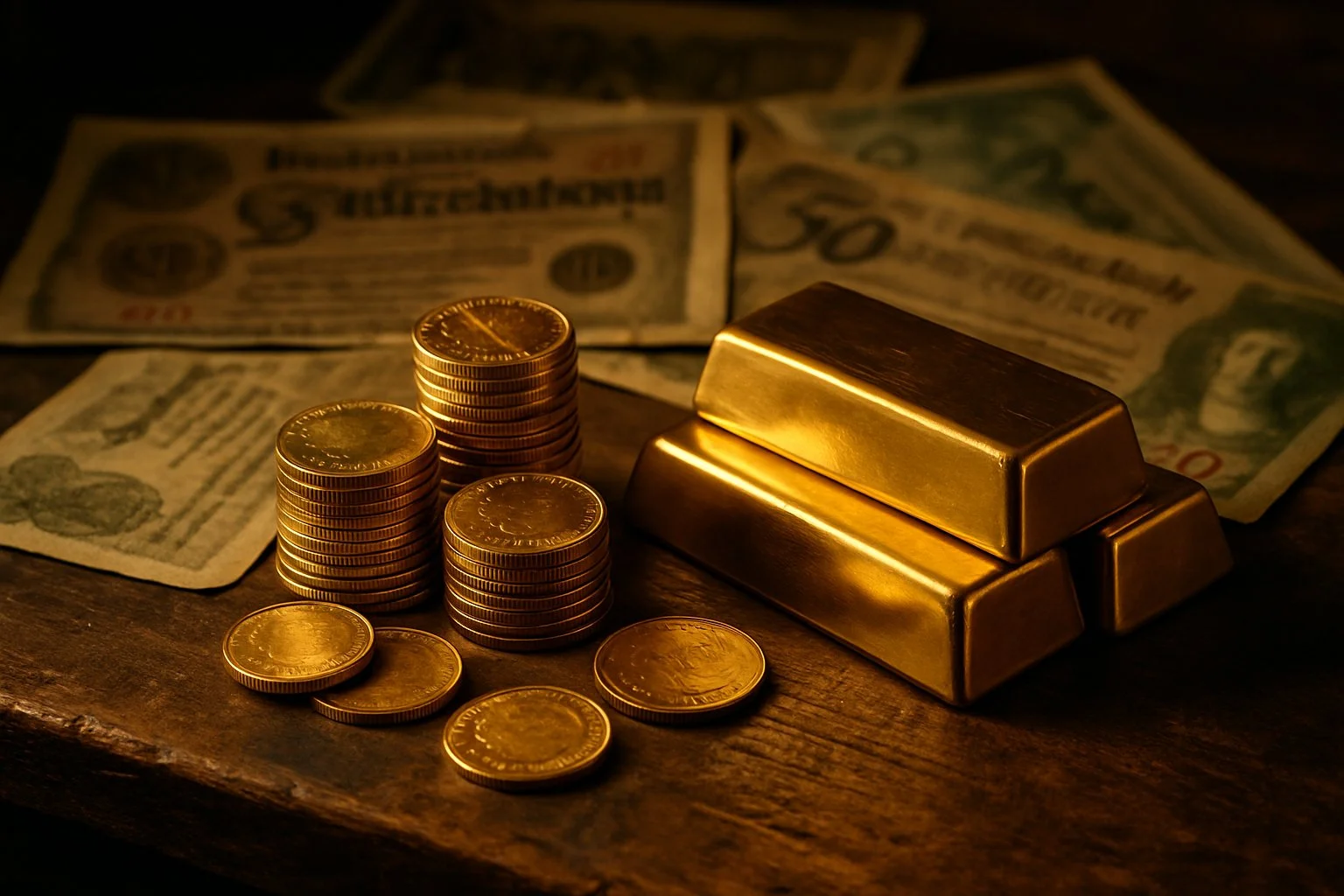
From 1921 to 1923, Germany went through one of the fastest currency collapses ever. The German Mark’s value fell so hard that prices changed within hours, and gold became the go-to for stability.
Collapse of the German Mark
After World War I, Germany faced huge reparation payments under the Treaty of Versailles. They had to pay in foreign currency or gold, not German Marks.
The government ditched the gold standard and started printing money to cover costs. By late 1923, 1 US dollar equaled over 4 trillion German Marks.
Papiermark, the paper currency, lost almost all value. Wages came twice a day so workers could spend money before prices jumped again.
Basic goods got scarce, and barter replaced cash in many places.
Surge in Gold Prices
As the Mark collapsed, gold’s local price exploded. In 1919, one gold Mark equaled one paper Mark. By November 1923, it took 1 trillion paper Marks to buy one gold Mark.
Gold’s value in Germany rose not because gold changed, but because the Mark became worthless. Charts from the time—see The Price of Gold During the Weimar Hyperinflation—show just how extreme this was.
Anyone holding gold or foreign currency kept their wealth intact. Those with savings in Marks lost almost everything.
Societal Impact and Wealth Preservation
The Mark’s collapse wiped out middle-class savings. Families who’d worked for decades saw their bank balances turn into scraps of paper.
People with gold, silver, or foreign currency could still buy food, property, and goods. Some even bought assets from desperate sellers at bargain prices.
Wealth preservation strategies shifted fast. Many turned to gold, not to get rich, but just to survive. According to Hyperinflation Weimar, riots and looting spiked as basic goods ran out.
Gold Standards, Convertibility, and Policy Responses

When countries tied currency to gold, they limited how much money could circulate. Breaking that link changed inflation, trade balances, and gave central banks more room to maneuver in a crisis.
Shifts in convertibility rules shaped both domestic economies and international exchange rates. It’s a complicated dance, and the impacts still echo today.
Abandonment of the Gold Standard
Many countries left the gold standard during severe economic stress. The United States, for instance, ended domestic gold convertibility in 1933 and later suspended international convertibility in 1971.
This shift let governments expand the money supply without needing matching gold reserves. Central banks gained more flexibility to adjust interest rates and respond to recessions.
In the Weimar Republic, dropping gold convertibility after World War I removed a key limit on currency issuance. That move fueled rapid money printing and eventually led to hyperinflation.
Other nations facing war debts and shrinking gold reserves saw similar patterns. Countries often gave up the gold standard when defending it became too expensive or risky.
Maintaining fixed gold exchange rates meant raising interest rates or selling foreign reserves. Those actions could deepen an economic downturn, so many governments chose to abandon the standard instead.
Effects of Loss of Gold Convertibility
When a currency lost gold convertibility, it no longer had a fixed value in gold. Exchange rates often became volatile, and foreign investor confidence could weaken.
Under a gold standard, the price of gold—like the fixed $35 per ounce in the mid-20th century—anchored currency values. Without that anchor, market forces set rates, sometimes causing sharp depreciation.
After the collapse of the classic gold standard after World War I, governments issued far more currency. This brought more liquidity but also raised the risk of inflation if output didn’t keep up.
For trade, losing a fixed gold link could help or hurt. A weaker currency might boost exports but also raise import costs, putting pressure on domestic prices.
Government Interventions and Currency Reforms
When gold convertibility ended, governments reached for policy tools to stabilize their economies. These included currency redenominations, price controls, and foreign exchange regulations.
The United States raised the official gold price from $20.67 to $35 per ounce in 1934. That change increased the dollar value of gold reserves and allowed the Federal Reserve to expand the money supply.
The Weimar Republic tried introducing the Rentenmark in 1923, backed by land and industrial assets instead of gold. This new currency helped restore some confidence after hyperinflation battered the economy.
Some countries pegged their currency to stronger foreign currencies instead of gold. That approach aimed to import monetary stability but demanded strict fiscal discipline to maintain.
Comparing Gold to Other Assets in Hyperinflationary Periods
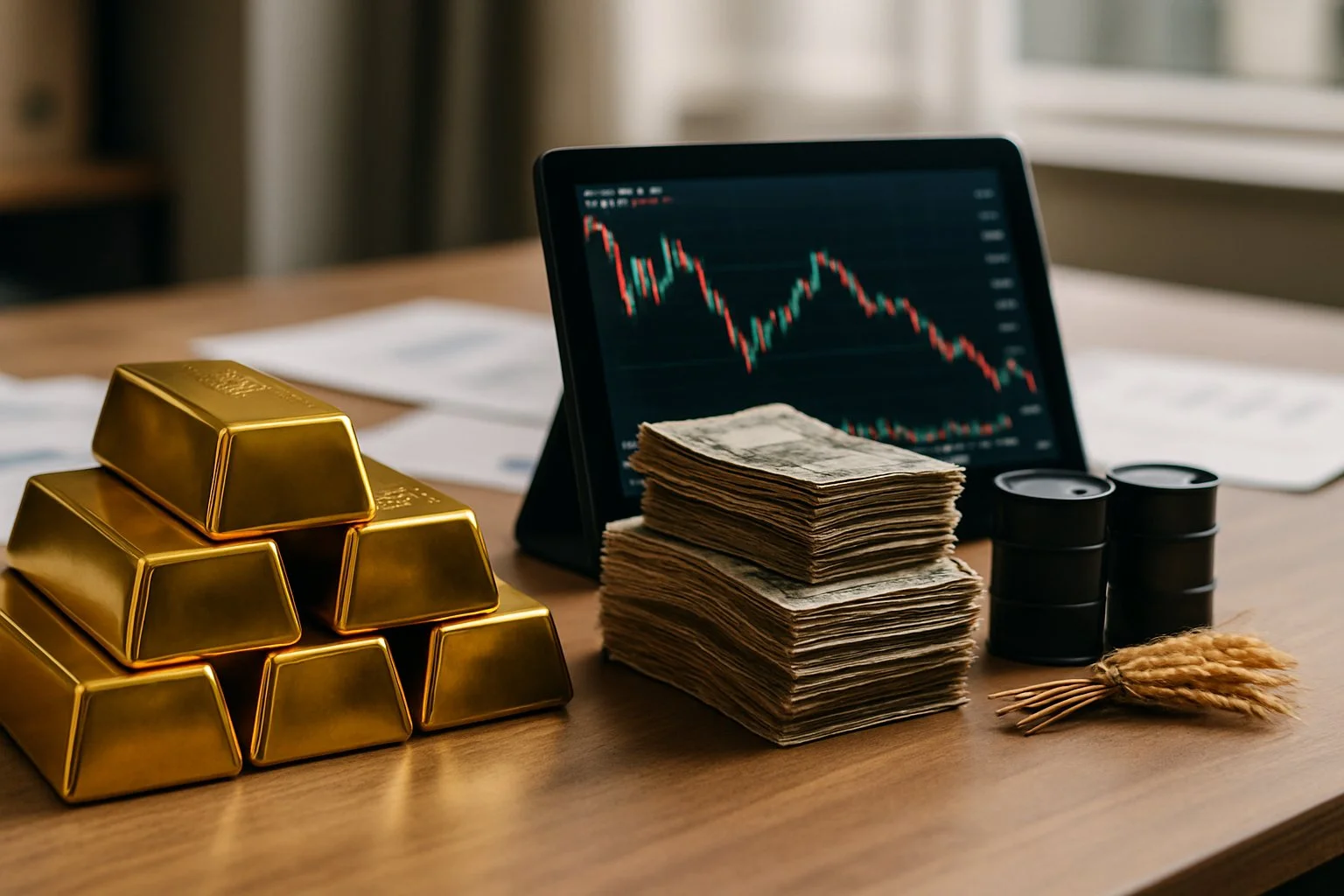
During hyperinflation, different assets react in their own ways. Some preserve purchasing power better than others, depending on how people value and trade them.
Gold tends to behave differently from both tangible goods and foreign currencies when domestic money loses value fast. It’s a bit of an oddball in those moments.
Gold Versus Real Assets
Real assets like real estate, farmland, or commodities can hold value during hyperinflation. But selling them quickly or dividing them into smaller pieces isn’t always easy.
Gold, on the other hand, is liquid and easy to trade in small amounts. In the Weimar Republic, the price of gold often shot up even faster than the cost of many goods and properties.
Government controls or falling demand can distort real estate values. Gold’s value, meanwhile, is set in global markets, so it’s less vulnerable to local economic chaos.
A quick comparison:
| Asset Type | Liquidity | Storage | Price Control Risk |
|---|---|---|---|
| Gold | High | Low | Low |
| Real Estate | Low | High | Medium-High |
You can store gold privately. Property, by contrast, is stuck in one place and subject to taxes or even seizure.
Gold Versus Foreign Currencies
Foreign currencies like the US dollar can also serve as a store of value during hyperinflation. In many places, people switch to dollars or euros for daily transactions when the local currency collapses.
But governments can restrict access to foreign currency through capital controls or legal limits. Gold doesn’t depend on banks and can be traded directly between people.
In some crises, like Zimbabwe in 2008, both gold and foreign currency gained value against the local currency. While the dollar’s purchasing power stayed mostly stable, the gold price often climbed in both local and foreign currency terms.
Gold also hedges against inflation in foreign currencies. If the US dollar weakens, gold’s price in dollars tends to rise, helping protect wealth in a way cash simply can’t.
Lessons for Modern Investors

Rapid currency devaluation has shown that some assets hold value better than others. Gold’s track record in past crises gives us real-world lessons about preserving purchasing power when inflation spikes.
Gold’s Relevance in Contemporary Inflation Risks
Modern economies usually see lower inflation rates than in past hyperinflation episodes. Still, the risk of faster price increases lingers, especially if governments ramp up money printing.
Gold often keeps its value when paper currency doesn’t. In events like Weimar Germany’s hyperinflation, gold prices soared in local currency terms, shielding holders from collapsing purchasing power.
In the 21st century, gold has reacted to inflation fears too. From 2008 to 2011, its price nearly doubled as central banks unleashed massive stimulus. Even outside hyperinflation, gold can act as a hedge.
Investors watch inflation indicators like consumer price indexes and currency strength. When those weaken, gold tends to look more appealing as a store of value.
Strategies for Wealth Protection
It’s practical to hold some gold alongside other investments. Diversifying that way can cut risk if inflation eats away at cash or bonds.
Some common strategies:
- Physical gold (coins, bars) for direct ownership.
- Exchange-traded funds (ETFs) for easy liquidity.
- Mining stocks for potential growth linked to gold prices.
Cases like Zimbabwe’s currency collapse show how gold can preserve wealth when local money fails.
It’s also smart to plan storage and insurance for physical gold. Secure, insured vaults or reputable custodians keep the asset safe in the real world.
Combining gold with other inflation-resistant assets can help investors build a portfolio that stands up to severe currency declines.
Frequently Asked Questions
Gold draws attention when currency values tumble. In past crises, it’s shown patterns that set it apart from other assets, sometimes holding or even increasing its value as paper money loses purchasing power.
Its ability to protect wealth depends on market conditions, investor behavior, and just how severe the inflation pressure gets.
How does gold perform as an investment during periods of hyperinflation?
During hyperinflation, gold usually holds its value better than local currency because global markets price it. As a tangible asset, it’s not directly tied to any single country’s monetary policy. Still, prices can swing due to supply, demand, and investor mood.
What is the historical relationship between gold prices and high inflation rates?
Historically, gold prices tend to rise when inflation runs hot, especially if it accelerates quickly. In places like Zimbabwe and Venezuela, gold prices in local currency exploded as the currency collapsed, mirroring the loss of purchasing power.
Can gold protect wealth in times of extreme currency devaluation?
Gold can act as a store of value when a currency tanks. In extreme cases, people have used gold to buy essentials when paper money became worthless. That’s happened in several historical hyperinflation events.
What trends have been observed in gold’s purchasing power during hyperinflationary periods?
In many hyperinflationary economies, gold’s purchasing power has stayed stable or even climbed when measured against basic goods. While prices in local currency soared, the amount of gold needed to buy essentials often stayed the same or dropped.
How do gold investments compare to traditional inflation hedges in hyperinflation scenarios?
Compared to real estate or foreign currency, gold is portable and easy to trade. Unlike bonds or savings accounts, it doesn’t rely on a stable currency. A lot of investors see gold as a more direct hedge against runaway inflation than other traditional inflation hedges.
What are the risks associated with investing in gold during times of hyperinflation?
Gold prices can swing wildly, even when markets feel shaky. That’s just how it goes—nothing’s ever totally stable.
If you own physical gold, you have to worry about where to keep it and how to keep it safe. That can be a real headache, honestly.
Sometimes, governments step in during a crisis and slap on taxes or restrictions for gold ownership. Suddenly, your access shrinks and your returns might take a hit.