




|
Getting your Trinity Audio player ready...
|
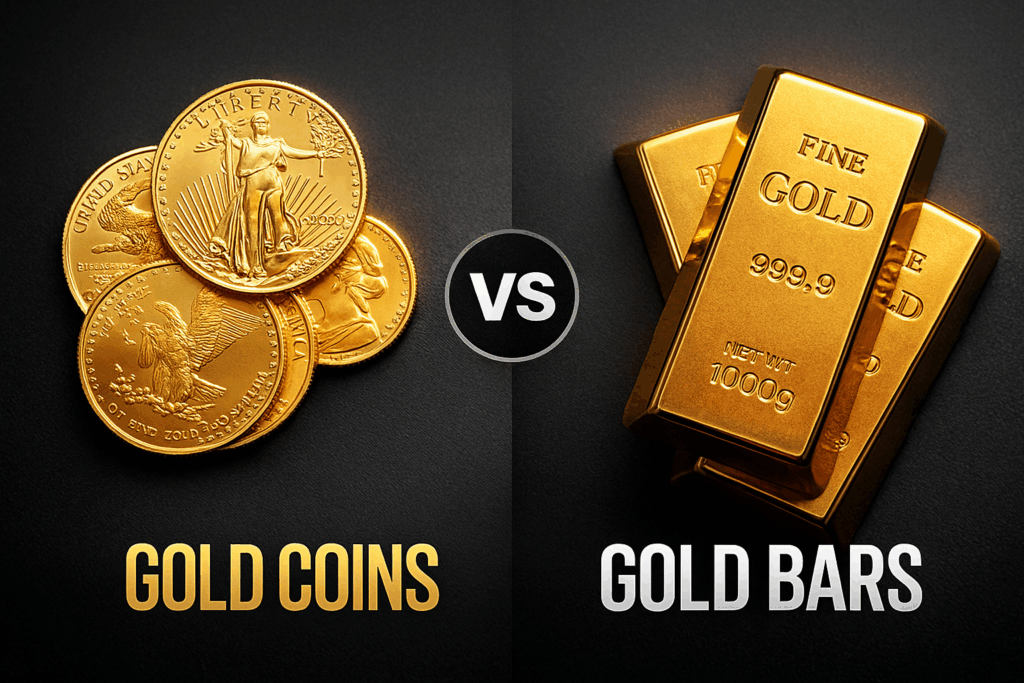
When you’re thinking about adding gold to your portfolio, you’ve got two main choices: gold coins or gold bars.
Both act as hedges against inflation and economic uncertainty, but they’re not quite the same when it comes to cost, storage, or how easy they are to sell.
Gold bars typically offer lower premiums over spot price at 1-4%, while gold coins carry higher premiums at 5-7% but provide better liquidity and recognition in the marketplace.
This basic difference shapes how each one fits into your investment plan.
Coins often appeal to smaller investors who want flexibility or maybe even some collector value.
Bars tend to attract folks making bigger investments who care more about squeezing out every bit of value.
Your choice really depends on a few things: how much you want to invest, how much space you have to store gold, and what you hope to get out of it long term.
It helps to weigh the trade-offs—like premium costs, liquidity, storage, and how well-known your gold will be when it’s time to sell.
Defining Gold Coins and Gold Bars
Gold coins are circular and minted by governments or private companies.
Gold bars are rectangular, refined blocks made by mints and refineries.
Both contain pure gold content, but they look and feel pretty different.
Their manufacturing process and available sizes also set them apart.
Physical Characteristics of Gold Coins
Gold coins have circular shapes and usually show off intricate designs—think national symbols, famous figures, or commemorative artwork.
Most coins measure somewhere between 16mm and 34mm in diameter, with thickness depending on the specific coin.
Government mints stamp each coin with its weight, purity, and country of origin right on the surface.
Edges often have special features—some are ridged or reeded to fight counterfeiting, while others are smooth with tiny inscriptions.
Every gold coin comes with a face value, but don’t let that fool you—it’s always much less than the gold is actually worth.
The finish can vary too; bullion coins look pretty standard, but proof coins have that flashy, mirror-like shine with frosted designs.
Physical Characteristics of Gold Bars
Gold bars are rectangular, flat, and have straight edges. They look more industrial and less “artsy” than coins.
You can get bars as tiny as 1 gram or as hefty as 400 ounces. Most people stick with 1 ounce, 10 ounces, or 1 kilogram.
Every bar gets stamped with its weight, purity, a serial number, and usually the refinery’s name or logo.
There are two main types: cast bars, which have a rougher look from being poured into molds, and minted bars, which are pressed and come out smooth and shiny.
Bars almost always hit .999 or .9999 purity, which is about as pure as gold gets.
Some bars even have holograms or special markings to help prove they’re real.
Major Types and Examples
Popular Gold Coins:
- American Gold Eagle – 91.67% gold, with a bit of silver and copper mixed in
- Canadian Maple Leaf – 99.99% pure gold
- South African Krugerrand – The first modern bullion coin, and still a classic
Gold coins fall into two buckets: bullion coins, valued for their gold, and numismatic coins, which get extra value from rarity or history.
Major Gold Bar Producers:
- PAMP Suisse – Swiss refinery, famous for high-quality small bars
- Valcambi – Makes the clever CombiBar, which you can break into smaller pieces
- Perth Mint – Australian mint making both bars and coins
Bars come as cast or minted. Cast bars are cheaper and rougher, minted bars are smoother and more precise.
Fractional sizes make both coins and bars accessible. Coins come in 1/10, 1/4, or 1/2 ounce. Bars start at just 1 gram.
Investment Fundamentals: Value, Purity, and Premiums
Understanding gold investments means getting how prices work above the basic metal value.
Premiums can swing a lot between coins and bars, and authentication is key for purity standards.
Gold Spot Price and Pricing Structures
The gold spot price is the starting point for everything.
It’s the current market price for one troy ounce of pure gold, ready to move right now.
Both coins and bars use this spot price, plus a little extra for costs and profit.
The spot price shifts constantly during trading hours, thanks to global supply and demand.
Key pricing factors include:
- Current spot price per troy ounce
- Weight and purity
- Manufacturing and distribution costs
- Dealer markup
Bars usually sell closer to spot than coins do.
A one-ounce bar might be just 2-4% over spot, while coins tend to run 5-8% higher.
Larger bars have lower percentage premiums since it costs less to make each ounce when you’re making big bars.
Understanding Premiums Over Spot
Premiums are what you pay beyond the gold’s spot price.
They change depending on the gold product and the market.
Bars usually have the lowest premiums.
Cast bars might be just 1-3% over spot, while minted bars could go up to 5%.
Typical premium ranges:
- Gold bars: 1-5% over spot
- Government coins: 5-8% over spot
- Fractional coins: 8-15% over spot
Coins cost more partly because of the extra design work and the government’s stamp of approval.
Smaller coins have higher percentage premiums, sometimes as much as 12% over the gold value for a tiny 1/10-ounce coin.
Market craziness can push premiums way higher for both bars and coins.
Assay Certificates and Authentication
Assay certificates prove a gold product’s purity and weight.
Investors rely on these documents to confirm authenticity, which helps a lot when it’s time to sell.
Most reputable bars come with an assay certificate from a well-known refinery.
The certificate lists the weight, purity, and serial number, matching up with the bar itself.
Certificate info usually covers:
- Exact weight in troy ounces or grams
- Gold purity, often 99.9% or higher
- Refinery name and location
- Serial number
You don’t usually need a separate assay certificate for government-issued coins.
Their designs and government backing are enough for authenticity, and national mints keep their purity consistent.
Private refineries build trust by keeping quality high and providing solid documentation.
Big names like PAMP Suisse or Valcambi are well respected, but lesser-known brands might get a skeptical look when you try to sell.
It’s smart to double-check that the certificate matches the gold—serial numbers, weights, and refinery marks should all line up.
Comparing Pros and Cons: Gold Coins vs. Gold Bars
Gold coins are easier to sell and might even pick up extra value for rarity, while bars keep things simple with lower premiums and compact storage.
Each one fits different investment goals and budgets.
Advantages of Gold Coins
Gold coins come with government backing and a face value, making them recognizable just about anywhere.
Sovereign mints add security features that help keep fakes out of the market.
Dealers buy and sell popular coins like American Eagles or Maple Leafs every day, so liquidity’s rarely an issue.
That recognition can speed things up when you’re ready to cash out.
Gold coins let you invest in smaller amounts, since most are available in one-ounce or even fractional sizes.
This flexibility is great if you’re not looking to drop a fortune all at once.
Some coins pick up numismatic value—rare dates or special editions can end up worth more than just their gold content.
Collectors often pay a premium for coins with a story or history.
Certain gold coins may even come with tax perks in some places, which can sweeten the deal compared to bars.
Advantages of Gold Bars
Gold bars usually cost less per ounce because they’re cheaper to make.
Premium savings run from 1-4% over spot, while coins are often 5-7% higher.
Bars stack neatly and save space, which is a real plus for anyone storing serious amounts of gold.
This efficiency can cut down on storage costs over time.
Bigger bars offer even better value—one-kilo bars, for example, tend to have the lowest premiums.
If you’re putting $25,000 or more into gold, bars are hard to beat for pure value.
Buying in bulk gets you more gold for your money, since the price per ounce drops as the bar size goes up.
Bars don’t need fancy designs, so manufacturing costs stay low.
Simple, rectangular bars are just easier and cheaper to produce than detailed coins.
Limitations of Each Option
Gold coins come with higher premiums that eat into immediate value. The extra cost for design and minting can cut into returns, especially for small investors.
Storage challenges hit coin investors in different ways. Coins need individual protection from scratches and damage, which makes storage more complicated and expensive.
Gold bars don’t have numismatic value. They only gain value if the gold price rises, so investors miss out on extra appreciation that some coins might offer.
Verification difficulties sometimes pop up with gold bars. Coins from government mints have clear authentication methods, but bars might need pricey testing to prove purity and weight.
Liquidity also isn’t the same for all products. Popular coins sell faster than odd-sized bars, and many dealers prefer coins because people recognize them right away.
Liquidity, Market Demand, and Ease of Selling
Gold coins usually offer better liquidity than bars because they’re widely recognized and come in smaller sizes. Gold bars save money on premiums but can be harder to sell, especially the big ones.
Gold Coins: Market Recognition and Resale
Gold coins have strong market recognition, so you can sell them quickly. Popular coins like American Gold Eagles and Canadian Maple Leafs have buyers everywhere.
Dealers, pawn shops, and online platforms all accept well-known coins. This broad acceptance means you can get competitive prices when you sell.
Key advantages for coin liquidity:
- Multiple selling venues available
- Strong collector and investor demand
- Government backing adds credibility
- Fractional denominations appeal to more buyers
The numismatic value of some coins can push resale prices above the gold content. Rare or historic coins often sell for premiums that beat spot gold prices.
Coins in smaller sizes like 1/10 oz or 1/4 oz attract buyers who can’t afford a full ounce. This wider buyer pool helps coins sell faster and sometimes sparks bidding wars.
Gold Bars: Selling Considerations
Gold bars generally have less liquidity compared to coins. Fewer buyers want big bars—usually just dealers or institutions.
Challenges when selling gold bars:
- Fewer potential buyers
- Authentication requirements more complex
- Larger denominations require bigger investments from buyers
- Less emotional appeal than coins
Smaller bars (1 oz or less) move faster than larger ones. A 10 oz bar needs a buyer ready to drop thousands more than someone buying a single coin.
Bars from trusted refineries like PAMP Suisse or Perth Mint have better liquidity than lesser-known brands. Buyers trust those names and their purity marks.
Some dealers pay less for bars than coins when you sell. The premium difference you pay up front might vanish on resale, which can affect your returns.
Fractional and Bulk Investment Flexibility
Gold coins offer more flexibility for selling off small amounts. You can sell individual coins and keep the rest of your holdings untouched.
Fractional selling benefits:
- Sell only what cash flow requires
- Test market timing with small amounts
- Maintain core gold position during partial sales
- Lower transaction minimums
Gold bars work best for big, one-shot transactions. Large investors who want to move lots of gold at once prefer bars for their lower premiums and easy storage.
A 100 oz gold bar suits someone making big portfolio moves. But if you want to sell half, you’ll need to find buyers for odd amounts or pay dealer fees to break it up.
Mixing coins and bars gives you the best of both worlds. Coins handle quick, small sales while bars are good for long-term storage.
Storage, Security, and Practical Considerations
Owning physical gold means planning for storage space, security, and protection. Gold bars save space, while coins give you more options for dividing and hiding your stash.
Storage Needs and Space Efficiency
Gold bars take up way less space than the same amount in coins. For example, a single 10-ounce bar is about the size of three stacked coins.
Space Comparison:
- 1 kilogram bar = space of 32 one-ounce coins
- 10-ounce bar = roughly 3 stacked coins
- Fractional coins require individual protection tubes
Bullion bars stack neatly in safe deposit boxes or home safes. They fit well into rectangular containers and don’t waste space.
Gold coins need more room because each one usually goes in a tube or capsule to protect it and keep its resale value up.
Storage Volume Requirements:
- Bars: Minimal packaging, maximum density
- Coins: Individual protection, scattered storage possible
- Home safes: Bars utilize space better
- Bank boxes: Both work well, bars more efficient
If you’re short on storage space, bars make more sense. Big wealth preservation plans work better with compact bullion bars.
Safety and Risk Management
Physical gold brings different security headaches depending on its form. Coins are easier to split up for small sales or emergencies.
Bars are riskier to hide because of their size. A big bar is tough to conceal, while you can scatter coins in different spots.
Security Advantages by Type:
| Feature | Gold Bars | Gold Coins |
|---|---|---|
| Concealment | Difficult | Easy |
| Divisible storage | No | Yes |
| Transport | Heavy, obvious | Portable |
| Emergency access | All-or-nothing | Gradual access |
Gold coins let you stash pieces in different places, which lowers the risk of losing everything to theft or disaster.
In an emergency, coins are easier to grab and use. You can access small amounts without tipping your whole hand.
Professional storage takes care of most home security worries. Bars and coins both get the same level of protection in commercial vaults.
Insurance and Professional Storage Options
Professional storage costs pretty much the same for bars and coins—it’s based on total value, not form. Most facilities charge about $1.80 per $1,000 of value per year.
Professional Storage Benefits:
- Full insurance coverage included
- Segregated storage options
- Regular audit certificates
- 24/7 security monitoring
Home insurance usually doesn’t cover much for precious metals. Most policies cap it at $1,000 to $2,500 total.
If you want separate precious metals insurance, it runs 0.5% to 1.5% of value per year. This applies to both bars and coins.
Storage Cost Factors:
- Minimum annual fees: $200-300
- Insurance: Included in professional storage
- Home coverage: Usually inadequate
- Geographic risk: Consider multiple locations
Places like Delaware Depository offer top-notch security for both bars and coins. The protection’s the same, no matter the form.
Storing gold yourself means you need to think hard about insurance gaps. A lot of people don’t realize how much it really costs to secure gold at home.
Strategic Portfolio Allocation and Choosing What’s Right for You
The choice between coins and bars depends on your investment goals. Coins bring numismatic potential, while bars are about cost efficiency.
Portfolio allocation strategies usually suggest 5-17% in precious metals, with the mix depending on wealth preservation versus growth goals.
Goals: Wealth Preservation vs. Potential Growth
If you’re all about wealth preservation, gold bars are usually the pick for their lower premiums and close tracking of spot prices. Bars often cost 2-5% over spot, while coins can be 6-10% above spot.
Gold coins appeal to investors chasing potential growth beyond gold prices. Government-minted coins like American Eagles or Canadian Maples sometimes pick up numismatic value over time.
Timeline matters. Short-term investors like bars for the lower entry cost, while long-term holders may prefer coins for the dual value.
Portfolio allocation recommendations:
- Conservative wealth preservation: 10-15% allocation, mostly bars
- Growth-oriented: 5-10% allocation, mix of coins and bars
- Balanced: 8-12% allocation, 70% bars, 30% coins
Numismatics and Collectability in Investment Decisions
Numismatic value is the extra collectors pay above gold content. Popular series like American Gold Eagles or South African Krugerrands can develop collector premiums over time.
Key factors that drive numismatic value:
- Mintage numbers – Lower production means more scarcity
- Historical significance – Commemorative or first-year issues
- Condition grades – Uncirculated coins bring higher premiums
Numismatics adds a layer of complexity to gold investing. Demand for specific coins goes up and down, sometimes ignoring gold prices entirely.
Bars don’t have numismatic value but give you pure exposure to gold price swings. That simplicity is nice if you want straightforward metals investing without the collectible angle.
Blending Coins and Bars in a Diversified Portfolio
A mixed approach combines bars’ cost efficiency with coins’ flexibility. Many investors put 60-70% in bars for core holdings and 30-40% in coins for liquidity and possible numismatic gains.
Practical allocation strategy:
- Large purchases: 1 oz or bigger bars for lower premiums
- Emergency liquidity: 1 oz coins for quick conversion
- Growth: Popular coin series with collector interest
For big allocations, bars make storage easier with their uniform shape. They stack well in safes or deposit boxes.
Liquidity varies. Coins are recognized more widely among dealers and the public, while bars need verification but suit bigger transactions for institutional buyers.
The best mix depends on your portfolio size, storage space, and how you plan to sell.
Frequently Asked Questions
Gold investors usually have questions about premiums, liquidity, storage costs, and which coins are most trusted. These common concerns help buyers sort out the real differences between coins and bars for their goals.
What are the advantages of investing in gold coins over gold bars?
Gold coins bring several perks that attract investors. They’re better for smaller investments and partial sales because you can split them up.
Coins are more liquid in most markets. You can sell them faster since more dealers and collectors want them.
Many coins also have numismatic value on top of their gold content. That collector appeal can boost their worth over time.
Government-backed coins like American Eagles come with authenticity guarantees, so you don’t have to worry much about purity or weight.
Coins work well for gifts and small transactions too. Their recognizable designs make them appealing to casual buyers.
How do gold bar investments differ from gold coin investments in terms of liquidity and market acceptance?
Gold bars usually have lower market acceptance than coins. Fewer dealers and buyers want bars compared to coins.
Bars force buyers to make bigger investments at once. This shrinks the pool of people willing to buy when it’s time to sell.
Institutional investors like bars for large transactions. Banks and investment firms often buy bars in bulk.
Bars tend to sell faster in wholesale markets. Coin shops are often less interested in buying bars from individuals.
Testing equipment matters more for bar sales. Buyers want to check purity and authenticity more thoroughly than with government-issued coins.
What factors contribute to the higher premium on gold coins compared to gold bars?
Manufacturing coins costs more than making bars. Coins need detailed designs and more complex minting.
Government backing bumps up coin premiums. Mints charge extra for authenticity and quality guarantees.
Small production runs push up the cost per coin. Limited edition and commemorative coins carry especially high premiums.
Marketing and distribution costs hit coins harder. Dealers spend more to promote and sell individual coins.
Numismatic value can drive coin premiums even higher. Rare or historic coins can sell for much more than their gold content alone.
Could you compare the storage options and associated costs for gold coins versus gold bars?
Coins need careful storage to keep their condition. Protective capsules and climate control help preserve numismatic value.
Storing individual coins costs more per ounce. Each coin might need its own protection and organization.
Bars stack easily and use storage space efficiently. Large bars maximize storage density in safes or vaults.
It’s easier to store coins at home than big bars. Coins fit in small safes and you can move them without much trouble.
Professional storage often costs less for bars. Vault services charge lower fees for storing standardized bar shapes.
Insurance can get pricey for rare coins. Numismatic value sometimes needs special coverage beyond the gold content.
How does the buying and selling process for gold bars differ from that of gold coins from a dealer’s perspective?
Dealers test bars more thoroughly when buying. Acid tests and electronic analyzers are common for checking bars.
Bar deals usually involve larger dollar amounts. This means more paperwork and sometimes stricter ID checks.
Coin authentication depends on government marks and design details. Dealers look for mint characteristics and known specs.
Bar prices stick closer to spot gold. Dealers add smaller markups and discounts, mostly based on gold content.
Coin prices factor in collector value and demand. Dealers have to consider more than just the gold weight.
Dealers usually sell coins faster than bars. Coins tend to move quicker in most markets.
What are the most recognized and trusted gold coins for investors to consider?
American Gold Eagles are the top pick for most US investors. The US Mint makes these coins, and dealers usually accept them without hesitation.
Canadian Gold Maple Leafs have that ultra-high 99.99% gold purity. People around the globe recognize them, and they’re easy to buy or sell.
South African Krugerrands kicked off the modern bullion coin era. Even though their gold content is a bit lower at 91.67%, you’ll find them accepted almost everywhere.
Austrian Gold Philharmonics stand out with their music-inspired designs. Investors in Europe seem to especially love these coins from the Austrian Mint.
Australian Gold Kangaroos give you another government-backed option. The Perth Mint keeps things interesting by changing the design each year.
Chinese Gold Pandas attract both collectors and investors. With limited mintages and fresh designs every year, they’ve got that extra numismatic twist.