




|
Getting your Trinity Audio player ready...
|
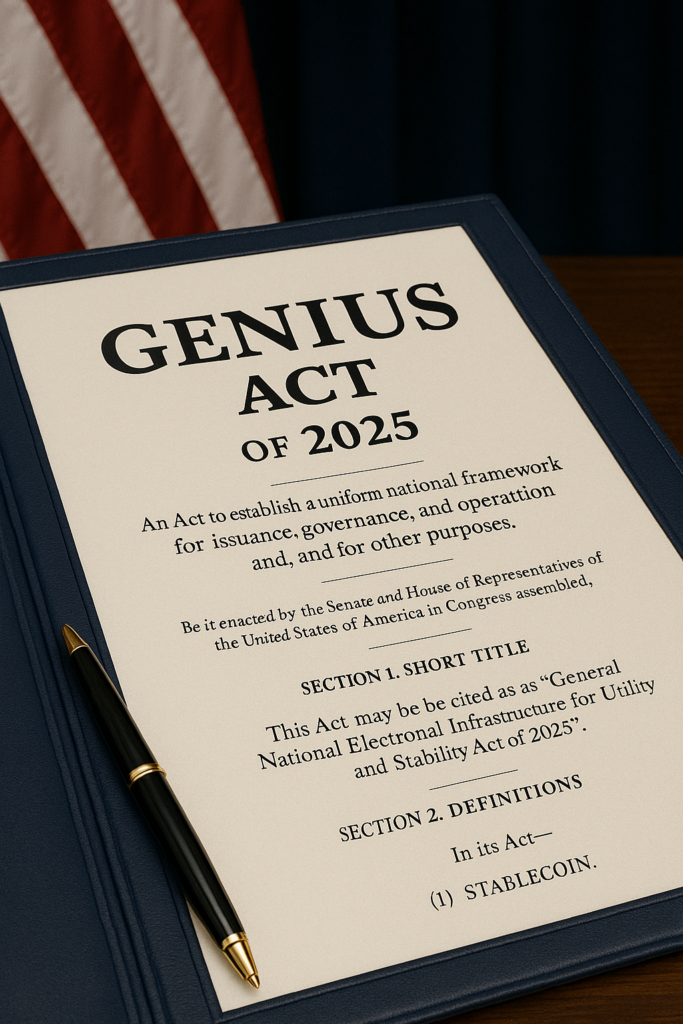
The digital currency landscape in the United States changed dramatically on July 18, 2025, when President Trump signed a new law. The GENIUS Act of 2025 is the first federal regulatory framework for stablecoins, finally setting ground rules for how these digital assets need to be backed and managed.
This law addresses the rise of stablecoins—digital currencies that aim to keep a steady value by tying themselves to traditional assets like the US dollar. Before this, stablecoin companies found themselves in a confusing patchwork of state rules and uncertain oversight.
Now, stablecoin companies have to back their digital currencies fully with liquid assets such as US dollars or short-term Treasury securities. There are also strict consumer protection rules, monthly reporting requirements, and clear authority handed to federal agencies to oversee the stablecoin market.
Overview of the GENIUS Act 2025
The GENIUS Act sets up the first federal framework for regulating payment stablecoins in the US. President Donald Trump signed this bipartisan bill into law on July 18, 2025, finally giving stablecoin issuers a clear set of rules and bringing some much-needed certainty to the digital asset market.
Purpose and Key Objectives
The full name—Guiding and Establishing National Innovation for U.S. Stablecoins Act—points to its focus: payment stablecoins. These are digital assets built for payments, not investment.
The law says issuers must keep 100% reserve backing in liquid assets, like US dollars or short-term Treasuries. Every stablecoin in circulation needs to have a matching dollar in reserve.
All approved issuers have to make monthly public disclosures about their reserve holdings. Transparency is non-negotiable here.
To protect consumers, the Act bans misleading ads. Stablecoin issuers can’t pretend their tokens are government-issued or guaranteed.
Anti-money laundering rules apply to every permitted issuer. They’ve got to follow the Bank Secrecy Act—think customer ID checks and due diligence programs.
Legislative History and Passage
Republican Senator Bill Hagerty introduced the GENIUS Act on May 21, 2025. The bill quickly picked up bipartisan support in both the Senate and House.
The Senate passed it on June 17, 2025. The House followed on July 17, 2025, passing it without any changes.
President Trump signed it the next day, July 18, 2025—making this the first federal law for stablecoin regulation.
The House had its own version, the STABLE Act (Stablecoin Transparency and Accountability for a Better Ledger Economy). Both bills aimed for similar outcomes, but Congress decided to move forward with the GENIUS Act.
Some lawmakers pushed for parts of the STABLE Act to be included, but in the end, the House passed the Senate’s version as is.
Relation to Other Digital Asset Laws
The GENIUS Act is laser-focused on payment stablecoins. It leaves out other digital assets like Bitcoin or Ethereum entirely.
The law keeps the SEC and CFTC out of payment stablecoin regulation. Instead, banking regulators like the OCC and Federal Reserve are in charge here.
Payment stablecoins aren’t counted as securities or commodities under this law. That sets clear boundaries for how different digital assets are treated.
Congress might pass broader crypto laws later in 2025. The Digital Asset Market Clarity Act is still on the table for other cryptocurrency rules.
Defining Payment Stablecoins and Digital Assets
The GENIUS Act spells out what counts as a payment stablecoin—digital assets made for payment and settlement. This helps draw a line between digital currencies and traditional financial products.
What Are Payment Stablecoins?
Payment stablecoins are digital assets that aim for a steady value, usually pegged to the US dollar. The GENIUS Act says these tokens must be built for payment or settlement, not speculation.
The law requires that payment stablecoins can always be redeemed at a fixed amount—so, one stablecoin should always equal $1.
Key Requirements:
- 1:1 backing ratio – Each stablecoin must be backed by at least one dollar in permitted reserves.
- High-quality reserves – Only coins, currency, insured deposits, and short-term government securities count as backing assets.
- Redemption guarantee – Users must be able to swap stablecoins for fiat currency at face value.
Issuers need to keep reserves that fully back every payment stablecoin in circulation. This is meant to protect consumers and keep the market steady.
Digital Asset Classifications
The GENIUS Act creates categories for digital assets. Payment stablecoins are just one slice of the larger digital asset pie.
Included Digital Assets:
- Payment stablecoins pegged to the US dollar
- Digital tokens made for payment and settlement
- Assets issued by regulated financial institutions
Excluded Classifications:
- Central bank digital currency (CBDC) from monetary authorities
- Traditional bank deposits and savings
- Federal Reserve notes and physical cash
- Securities covered under existing laws
The focus here is on privately issued digital assets that work as payment tools. Central bank digital currencies are outside this law—they’re a whole different animal.
This classification helps people tell the difference between types of digital money. It keeps payment stablecoins separate from things like distributed ledger tech that serve other purposes.
Distinctions Between Stablecoins and Other Digital Currencies
Payment stablecoins stand apart from other digital currencies because of their design and how they’re regulated. Unlike volatile cryptocurrencies, stablecoins are built to keep their value steady through reserve backing.
Payment Stablecoins vs. Other Digital Assets:
| Feature | Payment Stablecoins | Other Digital Currencies |
|---|---|---|
| Value Stability | Fixed 1:1 ratio to fiat | Volatile market pricing |
| Reserve Backing | Required liquid assets | No backing requirement |
| Primary Purpose | Payment and settlement | Investment or speculation |
Traditional cryptocurrencies like Bitcoin swing wildly with the market. Payment stablecoins, on the other hand, keep a steady value thanks to their reserve rules.
The GENIUS Act doesn’t regulate digital currencies that don’t have price stability built in. Those still fall under existing securities and commodities laws.
Regulatory Scope:
- Payment stablecoins: Full federal oversight
- Volatile cryptocurrencies: Existing frameworks
- Central bank digital currency: Federal Reserve’s domain
This setup lets payment stablecoins fit into the US payment system, while keeping regulatory lines clear.
Regulatory Framework and Oversight
The GENIUS Act sets up a two-tier regulatory system. Federal agencies oversee different stablecoin issuers depending on whether they’re banks, credit unions, or nonbank companies.
Federal Regulatory Structure
The GENIUS Act is the first federal framework for payment stablecoins in the US. Federally licensed nonbank issuers are watched over by a primary federal payment stablecoin regulator, chosen by federal banking agencies.
The Federal Reserve System has big authority over monetary policy parts of stablecoin regulation. The Commodity Futures Trading Commission and Securities and Exchange Commission still have a say if a stablecoin looks like a security or derivative.
Main federal oversight jobs:
- Capital and liquidity requirements
- Risk management standards
- Reserve asset restrictions
- Monthly disclosure rules
- Anti-money laundering compliance
The Comptroller of the Currency supervises national banks that issue stablecoins. The FDIC regulates state-chartered banks doing the same. These agencies have to write detailed rules within 18 months of the law’s passage.
State-Level Regulatory Regimes
States can still license and supervise nonbank stablecoin issuers through state-level regimes. Every state payment stablecoin regulator has to line up their rules with the federal standards from the GENIUS Act.
State regulators watch over nonbank issuers who pick state licensing instead of federal. Even these issuers have to follow federal rules for reserves and disclosures.
State regulator jobs:
- Licensing nonbank issuers
- Regular examinations
- Enforcing consumer protections
- Coordinating with federal agencies
States must keep their regulatory standards in line with federal requirements. This way, oversight stays consistent no matter which licensing route an issuer takes.
Primary Regulators and Their Roles
The primary federal payment stablecoin regulator depends on the issuer’s structure. Insured depository institutions and their subsidiaries stick with their usual federal banking agency supervisors.
The Federal Reserve oversees state member banks issuing stablecoins. The OCC regulates national banks and federal savings groups. The FDIC handles state nonmember banks.
The National Credit Union Administration supervises federally insured credit unions that issue stablecoins. Each regulator has to publish their requirements in the Federal Register after the Act goes into effect.
Nonbank issuers can pick between federal licensing under a main regulator or state licensing under their state’s authority. This gives issuers some flexibility, but keeps consumer protections steady across the board.
Requirements for Stablecoin Issuers
The GENIUS Act lays out who can issue stablecoins, how they have to back their tokens, and what protections users get during redemption or if things go wrong. The rules are a bit different for federal, state, and foreign issuers.
Types of Permitted Issuers
Banks and Credit Unions can issue stablecoins through subsidiaries under federal oversight. These insured depository institutions stick to existing banking rules while adapting to new stablecoin requirements.
Nonbank entities can become permitted payment stablecoin issuers, but the approval process is tougher. Financial institutions apply through federal regulators, while non-financial companies need a green light from the Stablecoin Certification Review Committee.
The committee features the Treasury Secretary and the chairs of the Federal Reserve and FDIC. They have to decide if non-financial issuers pose any real risk to the banking system.
State vs. Federal Paths break things down by issuer size:
- Federal qualified payment stablecoin issuers: Banks, credit unions, and the big nonbank players
- State qualified payment stablecoin issuers: Nonbank entities with less than $10 billion in outstanding stablecoins
- Foreign payment stablecoin issuers: Must meet U.S. requirements or operate under reciprocal arrangements
If an application sits for more than 120 days without action, it gets approved automatically under federal rules. That’s one way to keep things moving.
Reserve and Backing Rules
Stablecoin issuers have to keep one dollar of reserves for every stablecoin issued. This rule holds for every permitted issuer, no matter which regulatory route they take.
Permitted reserve assets are pretty specific:
- Coins and currency
- Deposits at insured banks and credit unions
- Short-term Treasury bills
- Government money market funds
- Central bank reserves
- Repurchase agreements backed by Treasury bills
Issuers can only use these reserves for things like redeeming stablecoins or as collateral in repos and reverse repos. Not a lot of wiggle room.
Monthly reporting requirements mean issuers need to disclose their reserve details every month. A registered public accounting firm has to check these reports, and the CEO or CFO must sign off on them.
Issuers with over $50 billion outstanding must also submit audited annual financial statements. Regulators will set new capital and liquidity rules, but stablecoin issuers aren’t subject to classic banking capital standards.
Redemption and Insolvency Protections
Redemption policies must be clear and public. Issuers are required to redeem stablecoins at their set value—usually one dollar.
Issuers can’t pay interest to stablecoin holders. That’s meant to keep stablecoins from competing head-to-head with regular bank deposits.
Bankruptcy protections put stablecoin holders first in line if an issuer goes under. So, holders get their money back before anyone else.
Court-ordered automatic stays can pause redemptions during bankruptcy. This helps keep things organized while still protecting holders’ rights.
Custodial protections keep customer funds separate from issuer assets. Reserve custodians have to keep stablecoin backing apart from their own money, with very few exceptions.
The law makes it clear: stablecoins aren’t federally insured deposits. Even with all these consumer protections, that’s an important distinction.
Consumer Protection and Risk Management
The GENIUS Act lays out strict reserve requirements, transparency standards, and operational checks. These rules give stablecoin holders priority if things go south and aim to prevent money laundering while keeping the system stable.
Transparency in Reserves and Reporting
The GENIUS Act forces issuers to maintain 1-to-1 reserves for every outstanding token. Reserves must be highly liquid assets, like:
- U.S. coins and currency
- Demand deposits at insured banks
- Treasury securities with 93 days or less to maturity
- Short-term repurchase agreements
- Central bank reserve deposits
Issuers have to publish monthly reports showing how many stablecoins are out there and exactly what backs them. A registered public accounting firm examines these reports each month.
The CEO and CFO must personally certify the numbers. False certifications can mean criminal charges under federal law.
Companies can’t pledge or reuse reserve assets, except to create liquidity for redemptions. Treasury bills are only allowed as collateral for approved repurchase agreements.
Anti-Money Laundering and Sanctions Compliance
The GENIUS Act requires stablecoin issuers to follow Bank Secrecy Act rules. That means reporting suspicious transactions and keeping solid customer ID records.
Companies also have to set up economic sanctions compliance programs. These programs check transactions against watchlists and block anything that’s not allowed.
The law tailors risk management standards to each issuer’s business model. Regulators can tweak requirements based on company size and risk profile.
State-regulated issuers with less than $10 billion in stablecoins can stick with state oversight if their state’s rules are “substantially similar” to federal standards.
Risk Management and Capital Requirements
Federal regulators need to set capital requirements for stablecoin issuers. These can’t go beyond what’s needed for day-to-day operations and stability.
The law also demands interest rate risk management standards to guard against market swings. Companies have to keep enough liquidity to meet redemptions.
Information technology risk management requirements focus on keeping digital operations secure. Cybersecurity and system failures are both on the radar.
If a company goes bust, the GENIUS Act gives stablecoin holders priority over other creditors. That’s a last line of defense for consumers’ money.
The Investment Company Act exemption says compliant stablecoins aren’t securities. That’s meant to clear up regulatory confusion for issuers.
Impacts on Financial Markets and Payments
The GENIUS Act ties stablecoins to traditional financial instruments and requires 100% backing with highly liquid government securities. It basically positions stablecoins as a bridge between the digital payment world and established money markets.
Integration with Traditional Financial Systems
Banks and payment processors see new opportunities—and new hoops to jump through. Federally chartered banks can issue stablecoins directly, while payment companies have to stay under the $10 billion state cap or go federal.
The Act gives Digital Asset Service Providers a three-year window to offer compliant stablecoins. Non-compliant products will be kicked out of U.S. markets.
Payment speeds could get a serious boost. ACH and wire transfers can take ages, but stablecoins can settle in seconds, whether it’s peer-to-peer or merchant payments.
Card networks and wallet platforms have to step up their compliance and risk controls. This new rail opens the door to micropayments, DeFi, and smart device payments.
Financial institutions are showing fresh interest in stablecoins now that the regulatory fog is lifting. Banks can finally look at stablecoin services without as much hesitation.
Role of Treasuries and Repurchase Agreements
Stablecoin reserves have to include specific government securities to meet full backing requirements. Treasury bills, notes, and bonds with 93 days or less to maturity qualify.
Qualified repurchase agreements are another approved reserve tool. They let issuers earn some return while keeping liquidity high.
The Act bans rehypothecation of reserves, except in rare cases. Issuers can’t pledge or reuse reserve assets for just anything.
Cash and insured bank deposits are the backbone of reserve requirements. Issuers need a 1:1 ratio between stablecoins and backing assets.
Treasury securities are seen as the safest bet for backing. Short-term government debt keeps things secure and liquid for quick redemptions.
Monthly certification forces issuers to go public with their exact reserves and stablecoin numbers.
Interplay with Money Market Funds
Qualified money market funds are allowed as reserve assets under the GENIUS Act. They offer another liquid option beyond direct government securities.
Money market funds usually invest in short-term government debt and top-tier commercial paper. That lines up well with the Act’s reserve requirements.
Fund managers might see more demand from stablecoin issuers looking for better reserve management. The stable value of money market funds fits the stability stablecoins are shooting for.
Similarly liquid federal government-issued assets approved by regulators broaden the reserve menu. This gives issuers some room to innovate while still playing it safe.
Mixing money market funds with treasuries gives issuers more ways to hit reserve targets. Spreading across these instruments could help during big redemption waves.
Global and Industry Considerations
The GENIUS Act spells out rules for foreign stablecoin issuers in the US and sets compliance standards for digital asset service providers. There are also exemptions for certain transactions, so not everything gets the same heavy regulatory treatment.
Foreign Issuers and Cross-Border Implications
Foreign payment stablecoin issuers need to register with US regulators to serve American consumers. They have to stick to the same reserve standards as US-based issuers.
Registration Requirements:
- Submit detailed financial disclosures
- Set up US-based compliance operations
- Keep relationships with qualified custodians
Foreign issuers get extra scrutiny about their home country’s regulations. They need to prove their local oversight is up to US standards for consumer protection.
The law can create headaches if foreign and US rules clash. Some companies might have to choose which market to prioritize if they can’t satisfy both.
Cross-border stablecoin payments are under a brighter spotlight. The Treasury has more power to track international transactions for sanctions compliance.
Digital Asset Service Providers
Digital asset service providers dealing with payment stablecoins have to comply with the Bank Secrecy Act. That means exchanges, wallet providers, and payment processors all have to step up their game.
These companies need solid anti-money laundering programs. They have to know their customers and monitor transactions for anything sketchy.
Key Compliance Areas:
- Customer due diligence
- Suspicious activity reporting
- Sanctions screening
- Record keeping
Service providers must make sure the stablecoins they handle come from registered issuers. They can’t knowingly touch transactions involving unregistered stablecoin products.
Regulators get examination authority over these service providers. Companies risk penalties if their compliance or risk management falls short.
Compliance and Exemptions
The GENIUS Act carves out exemptions for certain transactions, so not everything is bogged down by heavy regulation. Small-value transactions under set thresholds can use simpler compliance steps.
Some business-to-business transactions get exempted if they don’t touch retail consumers. This cuts compliance costs for companies moving money behind the scenes.
Exemption Categories:
- Transactions under $1,000 per day
- Qualified institutional buyer transactions
- Internal corporate treasury moves
- Testing and development activities
Companies have to keep records proving they qualify for exemptions. If they misuse these categories, the penalties can be steep.
Exemption limits get reviewed from time to time. Regulators can bump them up or down based on what’s happening in the market.
Future Outlook and Ongoing Regulatory Evolution
The GENIUS Act sets the groundwork for stablecoin regulation, but broader digital asset laws are still in the works. Industry groups keep pushing for bigger crypto frameworks while Treasury focuses on rolling out the current rules.
Potential for Further Digital Asset Legislation
Congress is under pressure to regulate digital assets beyond just stablecoins. The GENIUS Act only covers payment stablecoins, so there are still gaps in crypto oversight.
Senate committees are looking at bigger digital asset frameworks. These new bills would tackle trading platforms, custody, and other crypto areas the GENIUS Act doesn’t touch.
The Treasury Secretary has spoken up in favor of more legislation. Treasury officials think the US needs broader rules to keep up with other countries.
Key areas for future laws might include:
- Crypto exchange regulation
- Clear rules for digital asset taxes
- DeFi protocol oversight
- NFT marketplace standards
Market watchers expect new bills in the next couple of years. How well the GENIUS Act works will probably shape what comes next.
Stakeholder Perspectives and Criticisms
Industry groups are pretty happy with the GENIUS Act, mostly because it finally brings some regulatory clarity. On the flip side, critics say the rules might be a bit too tight and could stifle innovation.
Banking associations seem to like the idea of a federal framework. They figure that having the same rules everywhere will cut down on compliance headaches and all that market confusion.
Crypto advocates, though, are raising their eyebrows at the strict reserve requirements. Some feel these rules give a leg up to traditional financial institutions, leaving crypto-native companies at a disadvantage.
Consumer protection groups are pushing for tougher enforcement tools. They don’t think the current penalties are strong enough to scare off bad actors in the stablecoin space.
State regulators? Their reactions are all over the map. A few states really want to keep running their own digital asset regulations, even with new federal rules coming in.
The GENIUS Act’s Role in U.S. Innovation
The GENIUS Act puts America right at the front of stablecoin regulation. It’s interesting—other countries are watching the U.S. playbook as they shape their own rules.
Having clear regulations might pull more institutional money into U.S. stablecoin markets. Banks and payment companies can move ahead on new products, feeling a bit more sure of themselves.
The Treasury’s timeline for rolling this out will shape how fast innovation happens. If regulators move quickly, U.S. companies could have a real shot at leading globally.
Innovation benefits include:
- Reduced regulatory uncertainty
- Clearer compliance pathways
- Improved investor confidence
- Enhanced consumer protection
Tech companies are already tweaking their products to fit GENIUS Act standards. Getting in early might just give them a leg up in the wild world of digital payments.