




|
Getting your Trinity Audio player ready...
|
If you want to start investing in precious metals, begin by deciding what role they should play in your savings and how much risk you can accept. With inflation and market volatility affecting savings, many Americans consider physical gold and silver as a way to diversify their portfolios and potentially preserve wealth.
Gold and silver offer tangible ownership. However, buying them requires an understanding of investment options, purity, pricing, storage and selling costs.
At Metals Edge, Chris Thompson emphasizes that in his work with precious metals buyers, first-time investors sometimes focus on the purchase price without considering purity, storage, or selling costs. Researching these details before buying gold and silver helps you make informed decisions.
This guide covers what you need to know before buying gold and silver, from choosing the right metals to avoiding common mistakes.
New to precious metals? Watch our free precious metals training video for a foundation before comparing your investment options.
What Are Precious Metals and Why Do They Hold Value?
Investing in precious metals involves buying metals with lasting economic value, primarily gold, silver, platinum, and palladium. Their scarcity, durability, and market demand make them popular choices for wealth preservation and portfolio diversification.
Beyond investment, these metals have practical uses across several industries:
- Gold: Electronics, dentistry, and jewelry.
- Silver: Solar panels, electronics, and electrical components.
- Platinum and palladium: Automotive catalytic converters and industrial applications.
Their limited supply and industrial demand also influence market prices. Other specialty metals, such as rhodium, iridium, ruthenium, and osmium, serve niche industries but offer fewer straightforward investment choices for beginners.
Why Start Investing in Precious Metals?
Investors consider precious metals for their tangible value, historical role as money, and potential to diversify long-term portfolios. Here are some of the main reasons:
A Hedge Against Inflation
Inflation gradually reduces the purchasing power of money, which is why some investors turn to gold as a potential store of value. As everyday expenses rise, precious metals may attract interest as a way to diversify savings and potentially hedge against currency depreciation. However, gold and other metals do not reliably rise during every inflationary period.
Portfolio Diversification
Holding different asset classes helps reduce reliance on a single investment market. Precious metals have historically shown periods of different price movements from stocks and bonds, making them a potential component of a diversified portfolio.
A Safe Haven in Uncertain Times
Economic downturns, geopolitical tensions, and currency concerns can influence investor demand for gold and silver. Some investors turn to physical metals during these periods because they represent tangible assets outside the traditional banking and securities markets.
Industrial Demand
Industrial demand also influences precious metals prices. Silver is used in electronics, electrical components and solar technology, while platinum and palladium are widely used in automotive manufacturing. Changes in manufacturing activity, technology and industrial demand can therefore affect these metals’ prices.
Gold vs. Silver vs. Platinum: How to Start Investing in Gold and Silver the Smart Way
Choosing a metal is one of the first decisions you’ll make when considering how to start investing in gold and silver.
Gold
Gold is widely recognized across international markets and has a long history as a monetary asset. Its established market, broad acceptance, and liquidity make it a common starting point for investors interested in physical bullion.
Gold typically costs more per ounce than silver, which means the initial purchase can require a larger budget. Its price also fluctuates, and physical ownership involves storage and insurance expenses.
Silver
Silver offers a lower entry price per ounce, making it accessible to buyers with smaller budgets. It also has substantial industrial demand, particularly in electronics, electrical components, and solar panels.
However, silver generally experiences greater price volatility than gold. It also requires more physical space than gold to store the same dollar value, which can increase storage considerations.
Platinum and Palladium
Platinum and palladium have significant industrial applications, particularly in automotive catalytic converters. Their prices can respond to changes in manufacturing demand, mining output, and supply disruptions.
Both metals have investment markets, but they offer fewer familiar bullion choices than gold and silver. Beginners can consider them as additional metals to research rather than automatic starting purchases.
A common approach among physical bullion buyers is to use gold as a core holding and silver as a more affordable addition. Smaller silver units also provide flexibility when purchasing or selling. This is one possible strategy, not a recommendation for every investor.
Ways to Invest in Precious Metals
You can start investing in precious metals through physical ownership or financial products linked to metal prices. Each method offers a different balance of control, convenience, costs, and risk.
Physical Bullion (Coins and Bars)
Buying physical gold and silver gives you direct ownership of the metal. Bullion is available in coins and bars of different weights and purities.
You control how you store your holdings, but you’re also responsible for secure storage, insurance, transportation, and resale arrangements. Physical bullion suits investors who value tangible ownership and want direct possession of their assets.
Precious Metals ETFs
Gold ETFs and other precious metals exchange-traded funds track the price of a particular metal or a group of metals. You purchase shares through a brokerage account rather than storing physical bullion yourself.
ETFs offer convenient trading and liquidity. However, you don’t directly own or possess the underlying metal. Fund expenses, custody arrangements, and counterparty considerations also deserve attention.
Mining Stocks and Funds
Mining stocks represent ownership in companies involved in extracting precious metals. Their performance depends on metal prices, production costs, management decisions, debt, and operational efficiency.
A rising gold price doesn’t automatically translate into higher returns for every mining company. Investors also face company-specific and broader stock market risks.
Futures and Options
Futures contracts and options allow investors to speculate on future metal prices. Futures involve agreements to buy or sell an asset at a predetermined price and date, while options provide specific contractual rights.
These products can involve leverage, significant price swings, and the possibility of substantial losses. They are generally more appropriate for experienced investors than beginners looking for long-term wealth preservation.
Precious Metals IRA
A precious metals IRA is a type of self-directed individual retirement account that can hold certain physical precious metals.
The account requires a qualified custodian and approved storage arrangements. The IRS limits which coins and bullion can qualify and establishes rules concerning account administration and distributions. Review the current IRS guidance for precious metals held in an IRA or consult a qualified tax professional before opening an account.
Summary: Here’s how the main precious metals investment methods compare:
| Method | Own Physical Metal? | Liquidity | Main Costs | Main Risks | Best For |
| Physical bullion | Yes | Depends on dealer and product | Premiums, storage, insurance, shipping | Price changes, theft, resale spread | Direct ownership |
| ETFs | Generally no direct ownership | High during market hours | Fund expenses and brokerage costs | Market and counterparty risk | Convenient market exposure |
| Mining stocks | No | Generally high for listed shares | Brokerage and fund expenses | Company and market risk | Investors interested in mining businesses |
| Futures/options | No direct ownership | Depends on contract and market | Trading fees, margin, and contract costs | Leverage and substantial losses | Experienced traders |
| Precious metals IRA | Yes, through the account and approved custodian | Restricted by account rules | Custodial, storage, and transaction costs | Market, account, and regulatory risks | Retirement account diversification |
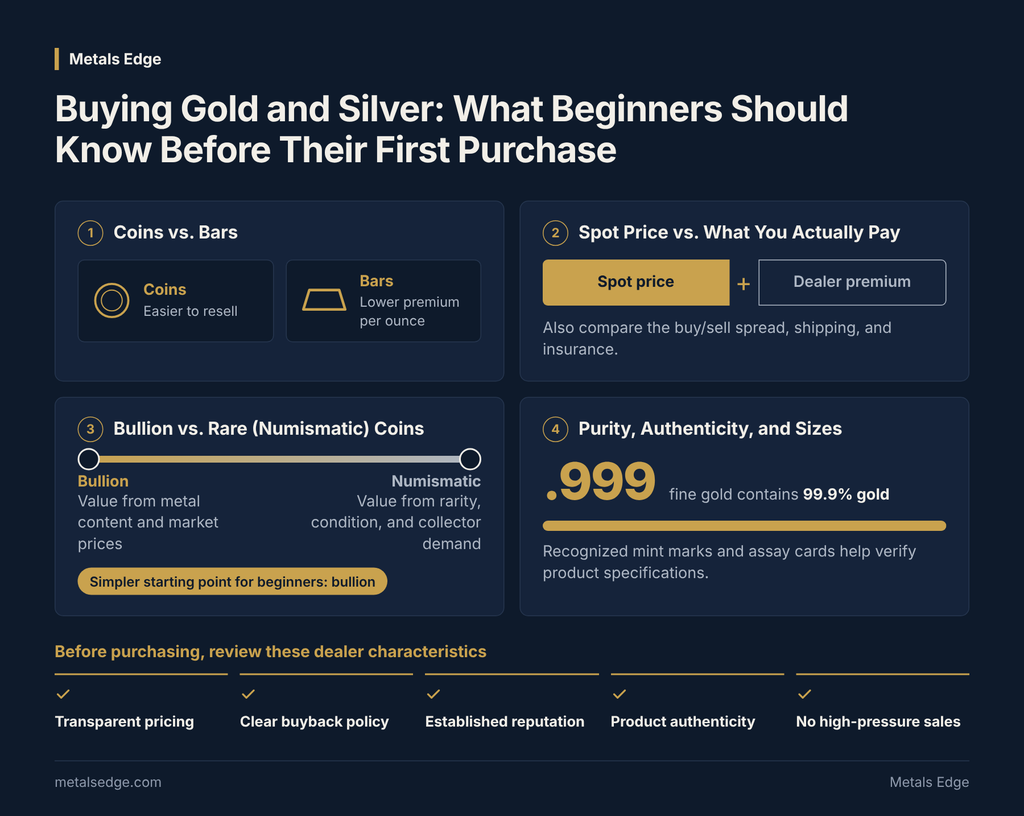
Buying Gold and Silver: What Beginners Should Know Before Their First Purchase
Buying gold and silver requires more research than comparing the advertised price of two coins. Product type, purity, weight, dealer premiums, and resale conditions all affect the value of a purchase.
Coins vs. Bars
Bullion coins and bars are the two main forms of physical precious metals.
Coins are widely recognized and generally easier to resell. Bars typically carry lower premiums per ounce, especially in larger sizes, but offer less flexibility when selling.
The choice depends on your budget, purchase size, and resale preferences.
Spot Price vs. What You Actually Pay
The spot price is the current market price of a precious metal. However, physical bullion typically costs more because dealers add a premium to cover manufacturing, distribution, and operating expenses.
Also consider the buy/sell spread, shipping, and insurance costs when comparing prices.
Bullion vs. Rare (Numismatic) Coins
Bullion coins derive most of their value from metal content and market prices. On the other hand, numismatic coins carry additional value based on rarity, condition, and collector demand.
Since rare coins require specialist knowledge and have less predictable resale markets, standard bullion offers a simpler starting point for beginners.
Purity, Authenticity, and Sizes
Check the metal’s purity, weight, and authenticity before purchasing. For example, .999 fine gold contains 99.9% gold.
Recognized mint marks and assay cards help verify product specifications. Smaller units offer greater selling flexibility, while larger bars generally have lower premiums per ounce.
How to Evaluate a Precious Metals Dealer
Before purchasing, review these dealer characteristics:
- Transparent pricing: The dealer clearly explains spot prices, premiums, and additional charges.
- Clear buyback policy: You know how the dealer handles resale and what affects the buyback price.
- Established reputation: Independent customer reviews and business history provide useful background.
- Product authenticity: The dealer provides recognized bullion products and appropriate documentation.
- No high-pressure sales: You have time to compare products and review the terms before committing.
How to Start Investing in Precious Metals: A Step-by-Step Plan
If you’re researching how to start investing in precious metals, a clear purchasing plan helps you compare your choices and avoid unnecessary expenses. Here are seven steps to consider:
Step 1: Define Your Goals and Time Horizon
Start by identifying why you want to own precious metals. Are you interested in preserving wealth, diversifying retirement savings, or holding physical assets outside traditional financial markets?
Your investment horizon also matters. Someone planning to hold metals for several decades has different liquidity requirements from someone who expects to sell within a few years.
Step 2: Decide How Much of Your Portfolio to Allocate
Think about precious metals as one part of your overall financial holdings rather than your entire investment strategy.
Review your existing savings, retirement accounts, emergency funds, and other investments. Consider how much price fluctuation you can tolerate and avoid committing money needed for everyday expenses.
Thinking in percentages can help you evaluate your allocation without relying on an arbitrary dollar amount.
Step 3: Choose Your Metal(s)
Compare gold, silver, platinum, and palladium based on price behavior, industrial demand, liquidity, and storage requirements.
If you’re considering how to start investing in gold and silver, review their differences before deciding. Gold offers broad market recognition, while silver provides a lower entry price and greater exposure to industrial demand.
Step 4: Choose Your Investment Method
Use the comparison table above to evaluate physical bullion, ETFs, mining stocks, futures, and retirement accounts.
Decide whether direct ownership matters to you or whether market exposure through financial products better fits your preferences. Review the costs and selling arrangements associated with each method.
Step 5: Find a Reputable Dealer or Custodian
Research dealers before placing an order. Compare their pricing, product selection, reputation, customer support, and buyback arrangements.
For retirement accounts, review the custodian’s services and approved storage arrangements. Buyers who want direct ownership with managed storage can also learn about the MetalsEdge Account.
Step 6: Make Your Purchase and Arrange Storage
Once you’ve selected a product and reviewed the full price, place your order and retain the purchase documentation.
Physical metals require a storage plan. Compare home storage, bank safe deposit boxes, and professional depositories. Review insurance coverage and access arrangements before choosing a location.
Some buyers also prefer purchasing in stages over time rather than making one large purchase. This spreads purchase dates across different market conditions, although it doesn’t eliminate price risk.
Step 7: Monitor, Rebalance, and Plan Your Exit
Keep track of market prices, your holdings, and any changes in your financial goals. Review your portfolio periodically to decide whether your precious metals allocation still fits your broader strategy.
Your selling process depends on the investment method:
- Physical bullion: Sell to a dealer or qualified private buyer after comparing buyback offers.
- ETFs: Place a sell order through your brokerage account.
- Mining stocks: Sell shares through your broker.
- Precious metals IRA: Follow the custodian’s distribution or liquidation procedures and applicable account rules.
Keep invoices, authenticity records, and transaction statements. These documents help establish ownership and support tax reporting.

Storage, Costs, and Risks to Consider
When buying gold and silver, the purchase price is only one part of ownership. Storage, insurance, resale costs, and market fluctuations also affect your overall experience.
Where to Store Physical Metals
You have several storage choices:
- Home safe: Offers direct access and privacy. However, theft, fire, and insurance coverage require consideration.
- Bank safe deposit box: Provides an additional layer of physical security, but access depends on bank hours and account arrangements. Contents are not automatically covered by FDIC deposit insurance.
- Professional depository: Offers specialized storage, security procedures, and potentially insurance coverage. Fees and withdrawal conditions vary by provider.
Key Risks
Consider these risks before purchasing:
- Price volatility: Gold and silver prices can rise or fall significantly.
- No income yield: Physical metals do not generate interest or dividends.
- Theft and insurance: Physical ownership creates storage and protection expenses.
- Dealer markups: High premiums and resale spreads can reduce returns.
- ETF and mining stock market risk: Financial products remain exposed to market movements and company-specific factors.
- Scams: Misleading investment claims, counterfeit products, and pressure sales can result in financial losses.
Note: Taxes may also apply when you sell precious metals or redeem financial products. Consult a qualified tax professional about your circumstances and applicable reporting requirements.
Common Mistakes When You Start Investing in Precious Metals
Beginners sometimes focus on the potential benefits of precious metals without reviewing the costs and risks of ownership. Watch out for these common mistakes:
- Chasing price spikes: Buying during a sudden rally without reviewing market conditions can lead to poor entry prices.
- Overpaying for collectible coins: High premiums don’t automatically translate into higher resale value.
- Ignoring the buyback spread: Failing to compare purchase and resale prices can reduce your potential returns.
- Skipping storage and insurance planning: Physical metals need an appropriate storage arrangement.
- Responding to cold calls or pressure sales: Take time to verify the seller and compare offers.
- Putting too much into one asset: Concentrating your savings in precious metals reduces diversification across other asset classes.
FAQs About Buying Gold and Silver
1. How Much Money Do I Need to Start Investing in Precious Metals?
You can start with a relatively small amount because fractional gold coins and smaller silver units are available. However, smaller products generally carry higher premiums per ounce, so compare the total purchase cost before placing an order.
2. Is It Better to Start Investing in Gold or Silver?
It depends on your budget and financial goals. Gold has broad recognition and a long history as a monetary asset, while silver offers a lower entry price and greater industrial exposure. Both have price risks.
3. Where Is the Safest Place to Buy Gold and Silver?
An established precious metals dealer with transparent pricing and a clear buyback policy is a good starting point. Review independent customer feedback, product authenticity documentation, business history, and customer service practices before purchasing.
4. Should I Store My Gold and Silver at Home or in a Depository?
Both choices have advantages and limitations. Home storage offers convenient access but requires personal security and insurance arrangements. Professional depositories offer specialized storage, although fees and withdrawal conditions apply.
5. Can I Hold Physical Gold and Silver in My Retirement Account?
Yes. A self-directed precious metals IRA may hold certain gold and silver coins and bullion through a qualified custodian and approved storage facility. Not every product qualifies, so review the current IRS requirements before opening an account.
6. How Do I Sell My Precious Metals When I’m Ready?
You can sell physical bullion back to a dealer or to a private buyer. ETFs and mining stocks are generally sold through your brokerage account. Compare the available offers, review the buyback spread, and retain your purchase and sale documentation.
Ready to Start Investing in Precious Metals?
Gold and silver have served as tangible stores of value for centuries. If you’re considering adding physical precious metals to your portfolio, begin by defining your goals, comparing metals and ownership methods, choosing a reputable dealer and planning for secure storage.
Metals Edge provides precious-metals education, product information and transaction support to help buyers evaluate their options.
Get My Free 2027 Wealth Protection Guide
You can also watch the free precious metals training video or learn more about opening a MetalsEdge Account.
For advice specific to your financial circumstances, consult an independent qualified financial, tax or legal professional.
Have questions about physical bullion, storage or precious metals IRAs? Contact Metals Edge.