




|
Getting your Trinity Audio player ready...
|
If you’re planning to buy precious metals, you may be wondering whether to start with gold or silver. Should you buy one gold coin or a stack of silver for the same amount?
A gold vs silver investment decision doesn’t have one answer for everyone. Gold is often valued as a store of value, while silver offers a lower entry cost and additional industrial demand.
The right choice depends on your budget, investment goals, and comfort with price volatility. This guide compares both metals and helps you decide which may suit your needs.
Silver vs. Gold at a Glance
Both gold and silver are popular choices for physical bullion, but they differ in affordability, demand, and storage requirements. Here’s how they compare:
| Factor | Gold | Silver |
| Primary role | Store of value and wealth preservation | Investment and industrial metal |
| Price volatility | Generally lower | Generally higher |
| Entry cost per unit | Higher | Lower, easier to start small |
| Storage space for the same dollar value | More compact | Bulkier |
| Premiums over spot | Typically lower as a percentage | Often higher as a percentage |
| Demand drivers | Investors, central banks, and jewelry buyers | Industry, including electronics and solar, and investors |
| Best suited for | Long-term stability seekers | Budget-conscious or growth-minded buyers |
These are general differences. Actual prices, premiums, and resale conditions depend on market demand and the product purchased.
Is Gold a Good Investment?
Gold has long been valued as a store of value, attracting investors who want to preserve wealth and diversify their holdings. But is gold a good investment for every buyer? That depends on the buyer’s financial goals, timeline and expectations.
Why Investors Choose Gold
- A Long History as a Store of Value: Gold has maintained its appeal across many economic cycles. Investors often hold it to preserve wealth over the long term.
- A Potential Inflation Hedge: Gold is often considered during periods of inflation or currency weakness. It may help preserve purchasing power over time, but its price doesn’t automatically rise whenever inflation increases.
- Recognized and Widely Traded: Well-known sovereign gold coins are familiar to dealers and buyers, which can make them easier to assess and resell.
- High Value in a Compact Form: Gold holds significant value in relatively little space, making it convenient to store compared with an equivalent dollar value of silver.
Drawbacks to Consider
Gold’s higher price per unit can make it harder for buyers with smaller budgets to get started. It also pays no interest or dividends, and its price can remain flat or decline for extended periods.
Selling flexibility is another consideration. Someone who buys a single one-ounce gold coin cannot sell just part of it. Fractional gold coins offer more flexibility, although smaller coins may carry higher premiums over spot.
Is Silver a Good Investment?
Silver can appeal to buyers who want to enter precious metals investing without the higher upfront cost of gold. But is silver a good investment? That depends on the buyer’s budget, goals, and comfort with price fluctuations.
Why Silver Appeals to Buyers
- Lower Entry Cost: Silver generally costs less per unit than gold, allowing buyers to start with smaller purchases and build their holdings gradually.
- Demand From Investment and Industry: Silver serves both investors and industrial users. It is used in products such as electronics and solar panels, creating demand beyond investment buying. The U.S. Geological Survey’s overview of silver’s industrial uses identifies electrical and electronic products and photovoltaic solar cells among its applications. However, industrial demand doesn’t guarantee higher prices or returns.
- Potential for Larger Price Movements: Silver can experience sharper price movements than gold. This creates potential for stronger gains when prices rise, but also exposes buyers to greater losses.
- Flexible Buying and Selling: Silver coins and smaller silver bars allow buyers to build holdings in manageable amounts and sell individual pieces when needed.
Drawbacks to Consider
Silver’s greater price volatility can test investors’ patience during sudden market changes. It also requires more storage space than gold for the same dollar value and can tarnish depending on the product and storage conditions.
Smaller silver products can carry higher premiums as a percentage of their value, increasing the upfront purchase cost.
For first-time buyers, silver can be a practical way to learn the bullion-buying process. Comparing premiums, checking authenticity, and planning secure storage can help avoid common purchasing mistakes.
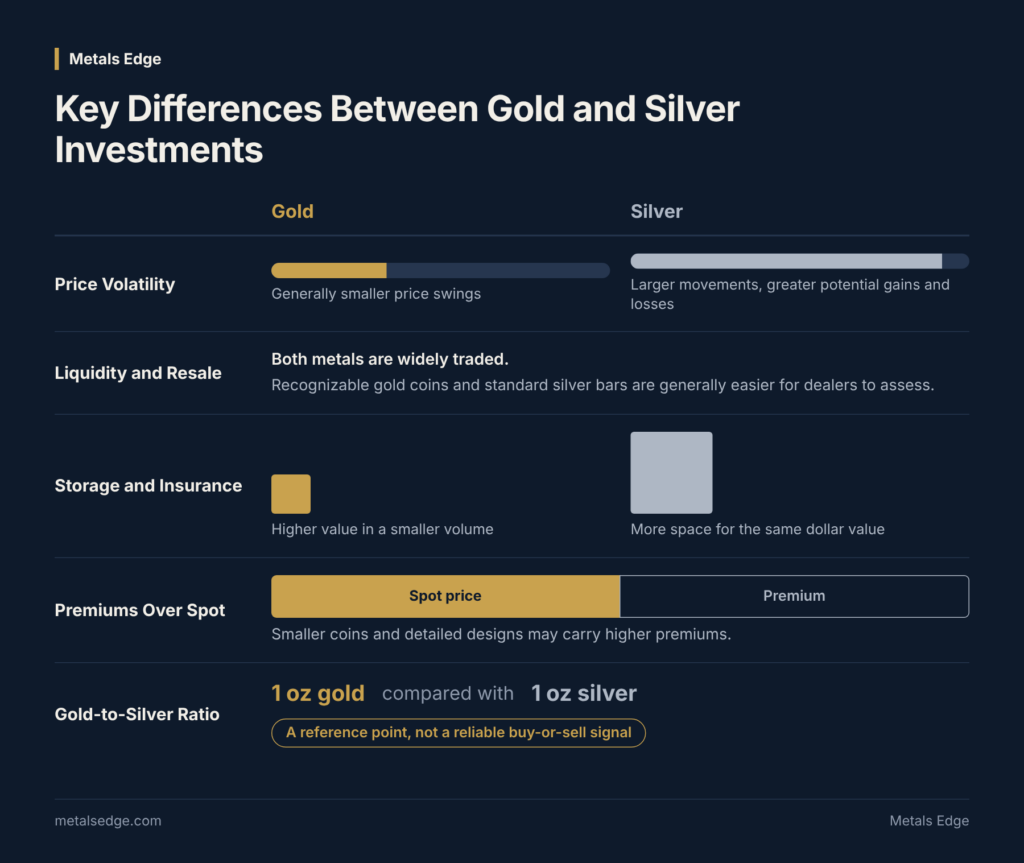
Key Differences Between Gold and Silver Investments
When comparing a gold vs silver investment, consider more than the purchase price:
- Price Volatility: Gold generally experiences smaller price swings, which may suit buyers who prefer relative stability. Silver’s larger movements can mean greater potential gains and losses.
- Liquidity and Resale: Both metals are widely traded. Recognizable gold coins and standard silver bars are generally easier for dealers to assess, although condition, authenticity, and market demand influence resale offers.
- Storage and Insurance: Gold’s higher value in a smaller volume makes it easier to store. Silver requires more space for the same dollar value, potentially increasing storage and insurance costs.
- Premiums Over Spot: The spot price reflects the market value of the metal. The premium is the additional amount paid for a physical product. Smaller coins and detailed designs may carry higher premiums because of manufacturing and distribution costs.
- Gold-to-Silver Ratio: This compares the price of one ounce of gold with one ounce of silver. Investors sometimes monitor it to understand how the metals are valued relative to each other. It is a reference point, not a reliable buy-or-sell signal.
Gold or Silver: Which Is Right for You?
Choosing between silver vs gold depends on your budget, investment goals, and comfort with market fluctuations.
- Choose gold if you: Prefer relatively lower price volatility, plan to hold long term, have limited storage space, or have a larger budget.
- Choose silver if you: Want a smaller starting investment, can tolerate greater price swings, prefer selling smaller units, or want exposure to industrial demand.
- Consider both if you want to balance your precious metals holdings. Holding both provides exposure to different demand drivers and price movements, which can support portfolio diversification.
Consider your financial goals and risk tolerance, and consult a qualified financial professional for portfolio-level decisions.
Smart Buying Tips Before You Invest
Before purchasing physical bullion, compare the total cost rather than focusing only on the listed price. These checks can help when investing in precious metals:
- Compare the total purchase cost: Check the spot price, dealer premium, shipping charges, and additional fees.
- Choose recognizable products: Well-known gold coins and standard silver bars are generally easier for dealers to identify and assess.
- Plan storage in advance: Decide whether a secure home safe or professional storage better suits your holdings. Factor in security and insurance costs.
- Buy from a reputable dealer: Look for transparent pricing, clear product information, and straightforward purchasing terms.
New to buying metals? Start with our complete Precious Metals Buyer’s Guide.
Read the Precious Metals Buyer’s Guide
Frequently Asked Questions
1. Is silver a better investment than gold for beginners?
Silver can be an easier starting point because its lower price per unit makes smaller purchases more accessible. However, it generally experiences greater price volatility than gold.
2. Is gold a good investment during inflation or economic uncertainty?
Many investors consider gold a long-term store of value during uncertain times. However, its price doesn’t always rise during inflation, and past performance doesn’t guarantee future returns.
3. Which is easier to sell: gold or silver?
Both metals are widely traded and can be sold through precious metals dealers. Gold offers more value in smaller quantities, while silver’s smaller units allow buyers to sell individual pieces.
4. Should I buy coins or bars?
Coins are generally recognizable and easier for dealers to assess, while bars often carry lower premiums depending on their size and manufacturer. Choose based on your budget and resale preferences.
5. How much of my portfolio should be in precious metals?
There is no universal allocation for every investor. The right amount depends on your financial goals, investment timeline, and risk tolerance. Consider consulting a financial advisor before deciding.
6. Where should I store my gold and silver?
You can use a secure home safe or professional storage services. Consider security, insurance, accessibility, and storage costs before choosing.
Gold vs. Silver: Which Investment Fits Your Goals?
When comparing a gold vs silver investment, neither metal is automatically the better choice. Gold offers relative price stability and compact value, while silver provides a more affordable entry point and potential for stronger price gains, alongside greater volatility. Some investors choose to hold both to diversify their precious metals holdings.
Ultimately, the better metal is the one that matches your budget, investment goals, and comfort with risk.
Ready to explore your options? Browse gold bullion and silver bullion available from Metals Edge.
Still deciding? Contact the Metals Edge team for straightforward guidance.