





|
Getting your Trinity Audio player ready...
|
Artificial intelligence is changing more than just our jobs and conversations. Its massive energy needs are creating huge new demand for electricity, and that’s shaking up precious metal markets in ways that are hard to ignore. Data centers powering AI used 80% more electricity between 2020 and 2025. That surge doesn’t look like it’ll slow down anytime soon.
AI’s energy appetite connects directly to precious metals through the infrastructure that keeps this tech revolution running. Power grid upgrades and renewable energy systems both need a lot of silver, gold, platinum, and other critical metals.
AI data centers are expected to use about 22% of all U.S. household electricity by 2025. Utilities have to expand and modernize the grid fast, and that means more copper for wiring, silver for solar panels, and platinum group metals for electrical components.
Supply chains are already stretched, and now several industries are fighting over the same materials. AI infrastructure, electric vehicles, and renewable energy projects all need these metals, pushing prices up and making supply constraints feel pretty inevitable.
AI and Data Center Expansion: The Core Drivers of Metal Demand
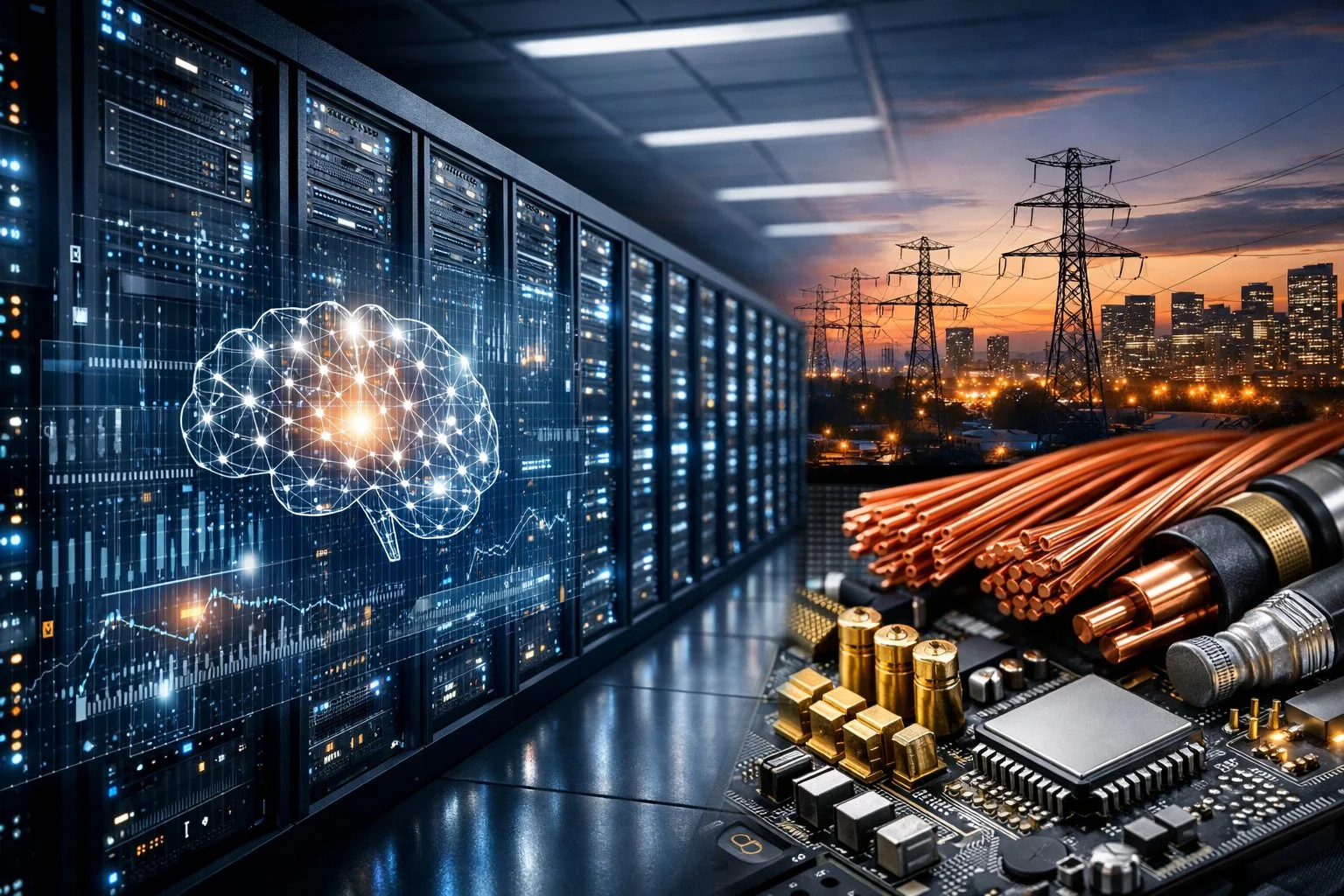
AI infrastructure needs a lot of precious metals for things like circuit boards, connectors, and cooling systems. Data centers running AI workloads chew through way more silver, gold, and platinum than old-school computing setups because they need more power and better performance.
Role of Artificial Intelligence in Infrastructure Growth
Companies have been pouring billions into high-performance AI computing. Goldman Sachs Research says global power demand from data centers will jump 165% by 2030 compared to 2023.
Data center demand could grow by about 50% to 92 gigawatts by 2027. In the U.S., spending on AI-ready data centers has tripled over the last three years.
These facilities stay nearly full even as they expand. High-performance computing needs beefier electrical systems and more robust cooling, which means more metal per square foot.
Each AI server rack packs in multiple processors, memory modules, and networking gear that all depend on precious metals for reliable signals and heat control.
Industrial Silver Demand in Data Centers
Silver is the go-to conductor in many data center setups thanks to its top-notch electrical and thermal properties. AI hardware uses silver in things like multilayer ceramic capacitors, membrane switches, and EMI shielding.
Server motherboards use silver-based coatings and contact surfaces. High-speed connectors need silver plating to keep signals clean at the insane speeds AI tasks require.
Power distribution systems in data centers use silver contacts in circuit breakers and bus bars. The metal’s low resistance cuts energy losses, which matters when a single big AI data center can use as much power as a small city.
Gold and Platinum Utilization in AI Hardware
Gold remains crucial for connections in AI processors and memory chips, especially where corrosion resistance can’t be compromised. Modern GPUs and TPUs have gold wire bonds, contact fingers, and edge connectors.
You’ll find gold plating on circuit boards, especially where high-frequency signals run. Gold’s stability keeps it from oxidizing, which is key in the hot, busy insides of server chassis.
Platinum doesn’t get as much attention, but it’s showing up more in data center infrastructure. It’s used in temperature sensors and some air quality systems.
Advanced cooling setups sometimes use platinum-based thermocouples for precise temperature monitoring of AI processors, which can run hot during training.
Energy Demand and Grid Strain: Implications for Metal Consumption
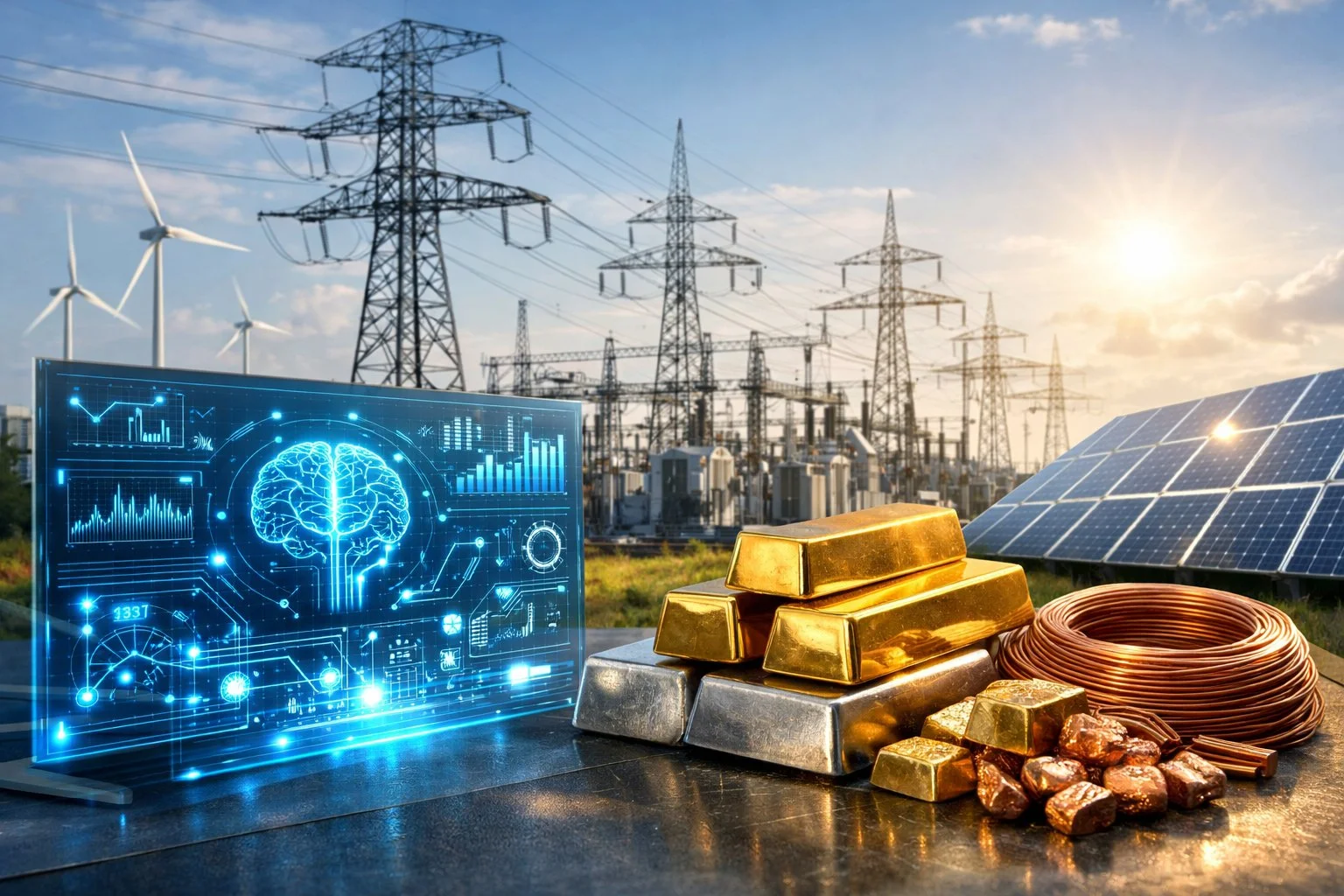
Data centers now use about 415 terawatt-hours of electricity a year, roughly 1.5% of global use. Projections say that’ll double to 945 TWh by 2030.
This expansion demands massive amounts of copper, silver, and other metals for power infrastructure and cooling equipment.
Surging Power Needs of Data Centers and AI Systems
AI-optimized data centers can draw as much power as a small city. Since 2020, their energy use has jumped 80%, and servers for AI training are growing at 30% a year.
This spike creates immediate demand for copper in transformers, switchgear, and cables. A single hyperscale data center can need thousands of miles of copper wiring.
AI servers run hotter and denser than regular ones, so they need thicker wires and tougher electrical gear. Silver paste also shows up in high-performance server parts where conductivity is critical.
Data center electricity use is outpacing total power consumption growth by more than four times. Infrastructure upgrades just can’t wait for the usual replacement cycles anymore.
Grid Adaptation and Power Delivery Systems
The aging grid is struggling with data center loads. Shortages of transformers, transmission bottlenecks, and slow permits are holding things up.
Utilities say it now takes longer to hook up new facilities to the grid than it does to build the data centers themselves. Power delivery needs a ton of metals:
- Copper: Main conductor in transformers, lines, and substations
- Silver: High-performance contacts and switches in critical equipment
- Aluminum: Used for long-distance power transmission
Each new gigawatt of grid capacity needs about 5,000 to 7,000 tons of copper. With data centers set to add over 500 TWh of demand by 2030, the metal requirements are enormous.
Backup power systems and uninterruptible supplies add even more metal use.
Cooling Systems and Thermal Management Challenges
AI servers generate so much heat that old-school air cooling just can’t keep up. Liquid cooling is becoming the norm for advanced data centers, which means lots of copper piping, heat exchangers, and pumps.
Thermal management systems rely on copper for heat sinks, cold plates, and manifolds. Copper’s thermal conductivity makes it irreplaceable here.
Some cooling designs even use silver-copper alloys for maximum heat transfer. Energy efficiency upgrades can cut cooling loads by up to 60% in the best facilities, but the sheer number of new installations means total metal use keeps rising.
Each liquid cooling loop uses a lot more copper per server than air-cooled setups, but the energy savings usually make it worthwhile.
Precious Metals at the Heart of the Technology Revolution
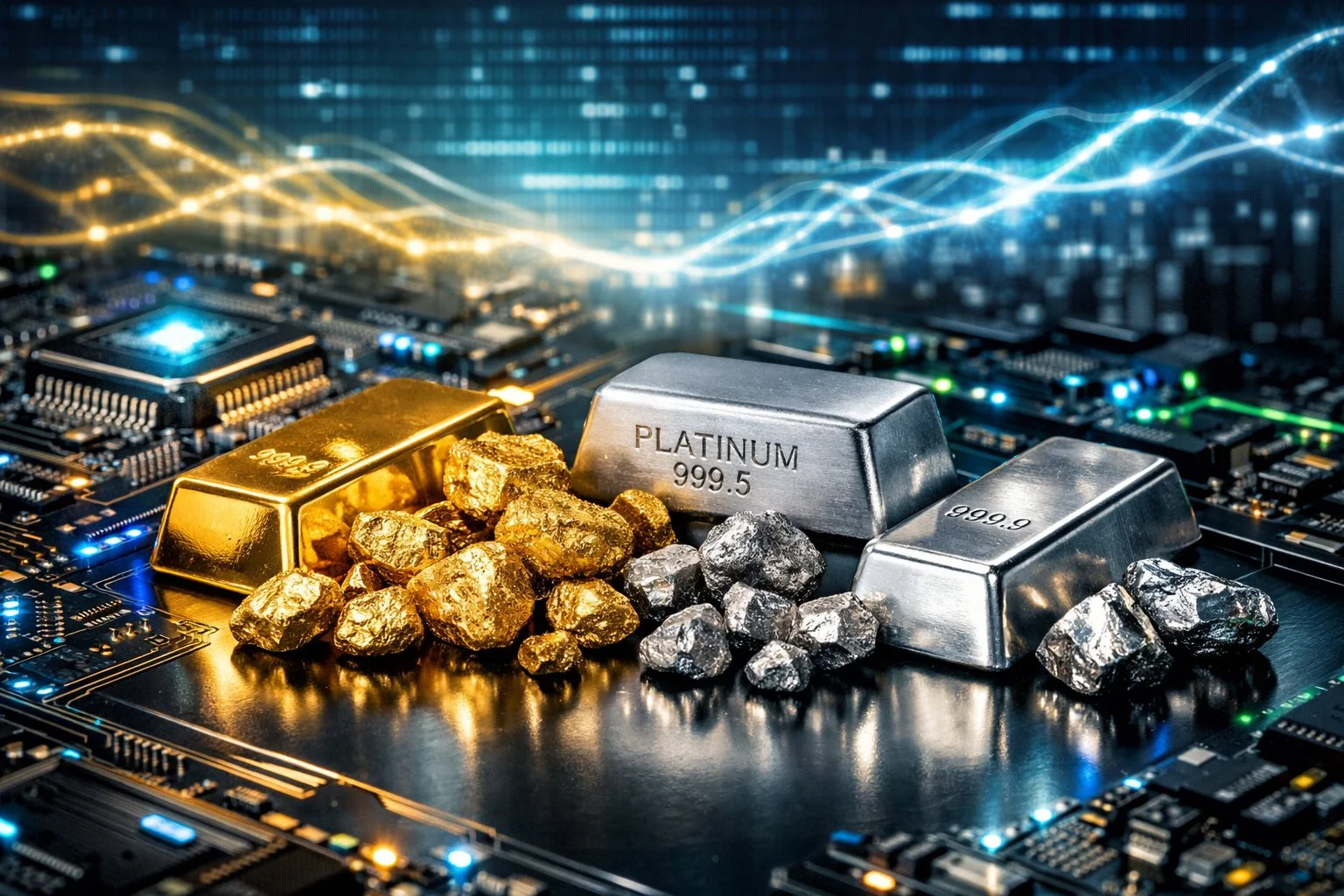
Precious metals offer unique properties that make them essential for AI infrastructure and advanced electronics. Silver, gold, platinum, and palladium provide top-tier electrical and thermal conductivity, plus they hold up in tough environments.
Electrical and Thermal Conductivity Advantages
Silver is the best electrical conductor out there, so it’s critical for high-frequency parts in AI processors and data center gear. Gold isn’t far behind and outshines others in reliability where steady signals matter.
These metals enable the lightning-fast data processing that AI needs. Thermal management is another big deal—AI chips get hot, and silver and gold help move that heat away fast.
Data centers running AI workloads use heat sinks and thermal interface materials with these precious metals. Platinum and palladium show up in specialized thermal applications like sensors and measurement devices, especially where stable conductivity across wild temperature swings is important.
Honestly, you just can’t swap these metals out for cheaper stuff without losing performance.
Corrosion Resistance and Durability
Precious metals resist oxidation and chemical wear, even in harsh conditions. Gold doesn’t tarnish or corrode, so electrical connections stay reliable for decades.
This matters for AI systems meant to run nonstop with minimal maintenance. Silver sometimes needs protective coatings but still beats copper for corrosion resistance.
Platinum and palladium are rock-solid against moisture, pollutants, and temperature swings—pretty common in data centers.
The long lifespan of precious metal components means fewer replacements and less downtime. AI infrastructure built for 10-20 years relies on materials that keep working the whole time. Corrosion resistance really does lower the total cost of ownership.
Critical Role in Electronic Components
Precious metals are everywhere in AI hardware—interconnects, sensors, and electronic parts. Gold wire bonds link chips to their packages, carrying data at high speeds.
These tiny connections are inside GPUs, memory modules, and specialized AI accelerators. Some of the main uses include:
- Circuit board contacts and connectors
- Multilayer ceramic capacitors
- Semiconductor bonding wires
- High-reliability switches and relays
- Precision sensors for environmental monitoring
Silver pastes create conductive traces on circuit boards and solar cells powering data centers. Platinum sensors track temperature, pressure, and gas levels to keep everything running smoothly.
Palladium is found in multilayer ceramic capacitors that regulate power for AI processors. Every advanced server running AI workloads has precious metals spread across hundreds of components.
As electronics shrink, their precious metal intensity grows—manufacturers keep cramming more performance into smaller spaces, and that means more metal per square inch.
Market Dynamics: Supply Constraints and Price Volatility

Precious metal markets are under growing pressure from structural supply deficits and limited recycling. Financial flows keep amplifying price swings, making things even more unpredictable.
Demand surges from AI infrastructure could send prices sharply higher. It’s a volatile mix, to put it mildly.
Structural Deficits in Silver and Gold Supply
Silver miners just can’t seem to expand production, even as prices rise. Global silver mine supply grew by less than 2% a year between 2020 and 2024.
Primary silver mines only provide about 25% of total output. The rest comes as a byproduct from copper, lead, and zinc mining.
This byproduct dependency means silver supply barely responds to price changes. It’s not exactly a nimble market.
Gold faces similar headaches. Major discoveries have dropped off a cliff in the past decade.
The average grade of gold ore plummeted from 10 grams per ton in the 1970s to about 1.5 grams per ton today. Miners now process seven times more rock to get the same amount of gold.
Getting a new mine online takes ages—7 to 10 years from discovery to production is typical. Permitting, environmental reviews, and infrastructure slow things down.
Copper mines are even slower, often taking 15 years or more for big deposits. The timelines are daunting.
Impact of Inelastic Supply and Urban Mining
Urban mining and recycling only help a little. Recycling covers about 25% of annual gold demand and 15% for silver.
Electronic waste holds plenty of these metals, but recovery rates stay low. Collection is tough and processing isn’t cheap.
Silver is especially tricky. Industrial uses eat up about half the annual supply, but the metal is used in such small amounts that recycling becomes uneconomical.
Solar panels, electronics, and medical devices all use silver in amounts too tiny to recover cheaply. It’s scattered everywhere, but not easy to get back.
Gold recycling is a bit more responsive. Jewelry recycling goes up when prices rise, though there’s a ceiling to how much can come from this source.
Asian markets, holding huge private gold stocks, recycle more based on local currency prices than dollar prices. It’s a unique dynamic.
Influence of ETF Holdings and Financial Flows
ETF holdings drive a lot of volatility. PSLV and other silver ETFs hold over 900 million ounces, while gold ETFs control about 3,300 tons.
These funds can swing prices as investors pile in or bail out, chasing sentiment. It’s a rollercoaster.
Financial flows often break away from physical fundamentals. Speculators in futures markets can move prices without any real-world supply-demand shift.
Managed money positions in silver can change by 50,000 contracts in weeks, representing 250 million ounces of notional exposure. That’s a huge lever on prices.
When physical demand jumps and ETF inflows spike, supply gets tight fast. Market makers and industrial users end up competing with financial buyers, pushing prices higher until something gives—either demand drops or new supply appears.
AI, Electric Vehicles, and Renewable Energy: Overlapping Metal Needs
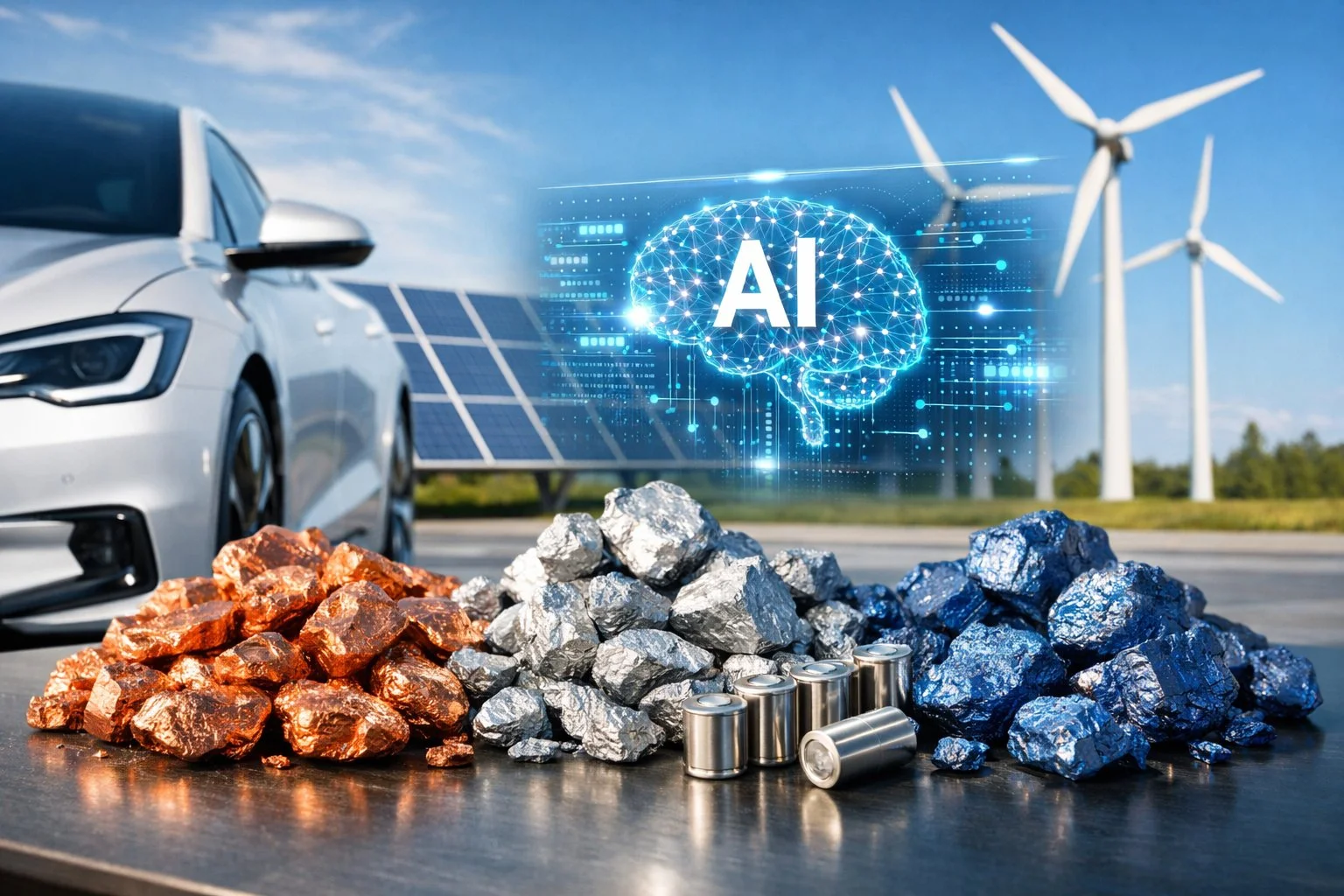
Electric vehicles, renewable energy, and AI infrastructure are all chasing the same critical minerals and precious metals. Silver tops the list, but gold, platinum, and palladium all have their own essential roles.
It’s a crowded field, with everyone reaching for the same pile of resources.
Silver and Critical Minerals in EV Manufacturing
Silver is key to electric vehicles. Each EV needs about 25-50 grams for contacts, circuit boards, and battery connections.
Its electrical conductivity is unmatched in many EV parts. You can’t really swap it for something else without losing performance.
EVs also need lithium for batteries, copper for wiring and motors, and rare earth elements like neodymium for those powerful magnets in electric motors.
One EV battery pack uses roughly 8 kilograms of lithium and 20 kilograms of copper. AI data centers and renewable infrastructure rely on these same materials.
Key metals per electric vehicle:
- Silver: 25-50 grams
- Copper: 80-100 kilograms
- Lithium: 8 kilograms (battery)
- Rare earth elements: 1-2 kilograms
Platinum and palladium are important for hydrogen fuel cell vehicles, though battery EVs still dominate the market.
Charging Infrastructure and Power Grid Upgrades
Charging networks are copper-hungry. A single fast-charging station uses 400-800 pounds of copper for electrical components and grid connections.
Grid upgrades to support EV charging need extra silver for switches, contacts, and solar panel integration. Transformers and substations use both copper and silver-based parts to handle the heavier loads.
That projected 30% gap between copper supply and demand by 2035? It’s driven by all these overlapping infrastructure needs.
Power distribution systems also use gold in specialized connectors and control systems where reliability is critical. It’s not a huge volume, but it matters.
Renewable Energy Systems and Precious Metal Use
Solar panels consume 10-20 grams of silver per panel for photovoltaic cells. That makes solar the biggest industrial user of silver.
Wind turbines need 200-400 kilograms of copper each, plus rare earths for generators. These are big, metal-intensive machines.
Energy storage systems for renewables use lithium-ion batteries, which need copper for connections and sometimes silver for specific cell designs.
Grid-scale renewable integration leans on smart grid tech, which relies on silver contacts and gold-plated components for sensors. Copper runs throughout the transmission network.
Vehicle-to-grid systems add more demand by connecting EV batteries to the power grid. It’s all interconnected, and it all adds up.
Geopolitical and Policy Factors Shaping Future Metal Markets

Countries are getting more protective of their metal resources, using nationalist policies and trade barriers. New regulations force companies to rethink how they source and move metals around the world.
It’s a shifting landscape, and the rules keep changing.
Resource Nationalism and Trade Tariffs
Major metal-producing countries are tightening their grip. China dominates critical mineral production and processing for clean tech, and it’s not shy about using that leverage.
Russia, Saudi Arabia, and others are following suit, expanding control over strategic reserves. Governments are slapping on tariffs and export restrictions to keep resources at home.
These policies aim to grow domestic manufacturing and cut reliance on imports. Trade tensions between the U.S., China, and Europe have made metal markets unpredictable, causing price swings and supply hiccups.
Resource nationalism limits where companies can get materials. Mining firms now have to partner with local governments or process metals domestically before exporting.
These restrictions push up costs and shrink the global supply pool. It’s getting harder to source what you need, when you need it.
Regulatory Impact on Supply Chains
New rules require companies to trace metals back to their origin and production methods. Carbon accounting in Europe and North America forces suppliers to measure and report mining emissions.
Companies that can’t meet these standards lose access to big markets. It’s a tough spot for some producers.
Supply chain regulations focus on critical minerals for EVs and renewables. Governments now set minimum percentages for domestically sourced materials in clean energy products.
Manufacturers have to move processing facilities and find new suppliers. It’s a scramble to adapt.
Producers who can prove sustainable practices get a leg up. Metals from verified operations fetch higher prices.
Frequently Asked Questions
AI tech is driving massive electricity demand, and that means big upgrades for grid infrastructure. It’s a huge deal for precious metals used in electrical systems, renewables, and advanced grid gear.
What impacts do advancements in AI have on electricity consumption and subsequent precious metal demand?
AI data centers might use up to 10% of U.S. electricity this decade. That’s a wild shift for an industry that barely grew in demand for twenty years.
Data center electricity demand could jump from 4 gigawatts to 84 gigawatts by 2030. Every new gigawatt needs loads of copper for wiring and transformers.
Silver is critical in solar panels and electrical contacts in data centers. As AI facilities expand, demand for both metals will keep rising.
How might increased energy demand for powering AI technologies influence precious metals used in energy infrastructure?
Ramping up power generation for AI eats up copper in transmission lines, transformers, and generators. Grid operators need to add capacity fast, but still keep things reliable.
Silver is essential in photovoltaic cells for solar power. Tech companies are snapping up renewable energy contracts for their data centers, which pushes silver demand even higher.
Platinum group metals show up in fuel cells and backup power systems. Data centers need uninterruptible power, and these metals help make that possible.
In what ways could AI-driven efficiency improvements in energy grids affect the market for metals such as copper and silver?
AI tools can boost transmission capacity by 10-30% using dynamic line ratings, all without building new lines. That means less immediate copper demand for new projects, and longer life for what’s already out there.
Smart grid tech uses AI to cut congestion, saving the U.S. over $20 billion a year. Better use of existing copper infrastructure delays some new metal-intensive builds.
Still, rolling out these AI systems takes sensors, communication gear, and hardware packed with silver, copper, and more. Whether efficiency gains outweigh the extra metal needs is still an open question.
What role do precious metals play in the construction and operation of smart grids and renewable energy systems?
Copper is the backbone of smart grids—cables, transformers, and electrical parts all rely on it. Upgrading a mile of transmission line can take several tons of copper.
Silver is vital for high-efficiency solar panels and electrical contacts throughout renewables. Smart grid sensors and switches also use silver for durable connections in tough environments.
Renewable energy integration needs storage systems that use various precious metals. Grid batteries have copper wiring, and some advanced types use silver as well.
How does the strain on energy grids from high-tech industries translate to changes in precious metal supply chains?
Grid strain has pushed interconnection wait times to a median of 5 years. More than 6 terawatts of projects are stuck in the queue.
This backlog creates unpredictable demand for metals needed in these builds. Utilities are upgrading transmission and adding new generation at the same time.
Supply chains are under pressure to deliver copper and silver at levels not seen in decades. Data center clusters in places like Texas and Virginia drive local surges in metal demand for grid improvements.
Can the implementation of AI in energy management systems lead to a more sustainable use of precious metals in grid infrastructure?
AI-enabled virtual power plants might handle 10 to 20 percent of peak load by 2030. They do this by coordinating distributed resources, which cuts down on the need for heavy, metal-hungry generation and transmission infrastructure.
Data centers can shift their loads based on grid conditions and how much renewable power is available. This kind of demand flexibility lets us use existing infrastructure more efficiently, so we don’t have to build as much new capacity—or use as many metals.
AI also helps us forecast renewable generation and load patterns with much more accuracy. With better planning, we avoid overbuilding and wasting copper, silver, and other metals on grid components that barely get used.
AI can optimize transmission systems in real time, trimming the need for extra capacity. Using dynamic ratings and smarter dispatch, we end up needing less metal for every unit of electricity we deliver, especially compared to the old static planning approaches.