




|
Getting your Trinity Audio player ready...
|
A gold investment may appeal to people seeking diversification, protection against uncertainty, or an asset they can physically own. With inflation concerns and market swings, many are asking whether investing in gold fits their goals.
Gold isn’t guaranteed to build wealth: its price fluctuates, and it pays no interest or dividends. This guide covers its benefits, risks, and long-term performance.
If you’re considering physical gold, the complete Metals Edge Buyer’s Guide explains the buying process and the factors to consider before making a purchase.
What Does Gold as an Investment Actually Mean?
Gold is a store of value, not an income-producing asset. It pays no interest or dividends. Investors can buy bullion, ETFs, mining stocks, or eligible precious metals through a Gold IRA.
First-time buyers sometimes expect a gold investment to grow like a stock. Gold doesn’t generate business profits; investors generally use it to diversify or preserve wealth.
Benefits of Investing in Gold
The benefits of investing in gold go beyond the potential to earn returns from rising prices. Investors often consider gold for its ability to help preserve purchasing power, diversify portfolios, and provide ownership of a tangible asset.
A Potential Hedge Against Inflation and Currency Weakness
Gold has historically been used to preserve purchasing power over longer periods, particularly when inflation reduces the value of money. Investors may also consider it when concerned about currency weakness or economic uncertainty.
However, gold doesn’t automatically rise when inflation increases. Its price also responds to interest rates, currency movements, and market demand. It may help preserve wealth over time, but it isn’t a guaranteed short-term inflation hedge.
Portfolio Diversification
Gold doesn’t always move in the same direction as stocks and bonds. Adding it to a portfolio can help spread investment risk and reduce dependence on traditional financial markets.
For investors considering a gold investment, this can provide another way to balance their holdings. However, diversification doesn’t eliminate the possibility of losses.
Tangible Asset With No Counterparty Risk
Physical gold offers direct ownership rather than a financial claim against a company or institution. A gold coin or bar doesn’t depend on a bank or business remaining solvent for its physical existence.
However, physical ownership comes with responsibilities:
- Storage: Coins and bars need secure storage.
- Protection: Owners may need insurance against theft or loss.
- Verification: Buying from a reputable dealer helps reduce counterfeit risks.
This advantage applies to physical gold held directly, not necessarily to financial products such as gold ETFs.
Global Liquidity
Gold is widely recognized and traded across international markets. Investors can generally sell physical coins and bars through reputable precious metals dealers when they need cash.
However, global recognition doesn’t guarantee an immediate sale or a price equal to spot. The amount received depends on:
- Current spot price: The market price when the gold is sold.
- Product type and condition: Recognized bullion products may be easier to assess and resell.
- Dealer’s buyback terms: The offer may be below the current spot price.
Some buyers approach gold as financial protection rather than a way to make quick profits. For example, an investor may set aside a modest portion of savings in physical coins or bars to diversify their assets without expecting immediate returns.
Risks and Drawbacks to Consider
While a gold investment can help diversify a portfolio and preserve wealth, it also comes with costs and limitations. Before investing in gold, consider these potential drawbacks:
- Short-term price volatility: Gold prices can rise or fall due to changes in interest rates, currency values, economic conditions, and investor demand. Selling during a price decline may mean receiving less than you paid.
- No regular income: Gold doesn’t pay interest or dividends. The money invested could otherwise earn income through interest-bearing or dividend-paying assets.
- Premiums and dealer spreads: Physical gold coins and bars usually cost more than the current spot price because of manufacturing, distribution, and dealer markups. Dealers may also offer less than spot when buying them back. Learn more about gold premiums, dealer fees, and buyback policies.
- Storage and insurance costs: Physical gold needs secure storage, whether at home or in a professional facility. Insurance may add another ownership expense.
- Counterfeit risk: Unverified sellers may offer counterfeit products or misrepresent purity. Choose a reputable dealer that provides transparent pricing and clear product details.
- Tax considerations: The IRS may treat long-term gains from certain precious metals, including gold bullion, as collectibles gains. The applicable tax treatment depends on the asset and holding period. Review IRS Publication 550 and consult a qualified tax professional before selling.
Understanding these costs and risks before buying can help you make a more informed investment decision.
How Has Gold Performed Over the Long Term?
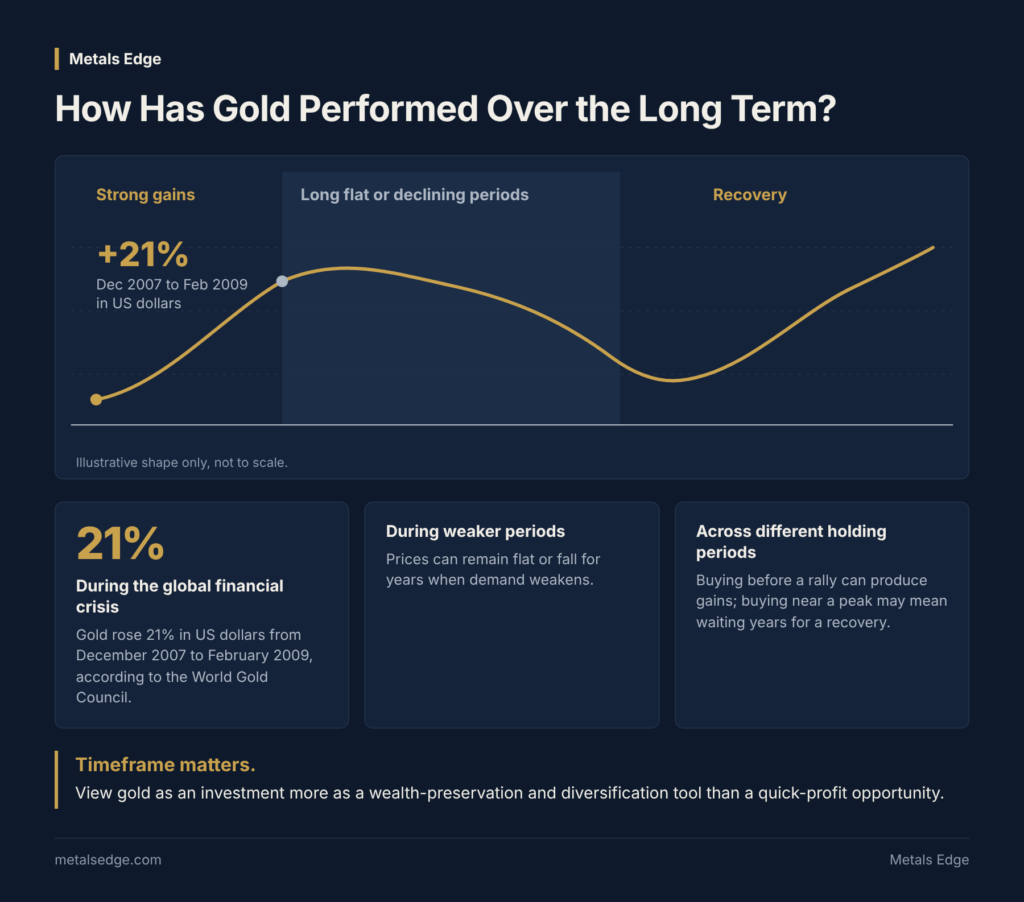
Gold has seen strong gains and long periods of flat or declining prices. It has held up during some crises, but not all.
- During the global financial crisis: Gold rose 21% in US dollars from December 2007 to February 2009, according to the World Gold Council.
- During weaker periods: Prices can remain flat or fall for years when demand weakens.
- Across different holding periods: Buying before a rally can produce gains; buying near a peak may mean waiting years for a recovery.
Timeframe matters. View gold as an investment more as a wealth-preservation and diversification tool than a quick-profit opportunity.
Ways of Investing in Gold Compared
There are several ways of investing in gold, and the right option depends on your investment goals, budget, and preference for direct ownership. Some investors prefer physical gold they can hold, while others choose financial products that provide exposure to gold prices.
| Option | How You Own It | Key Advantages | Key Drawbacks | Best For |
| Gold Bullion Bars | Physical ownership | Typically lower premiums per ounce; tangible asset | Storage requirements; less divisible | Larger, long-term holders |
| Gold Bullion Coins | Physical ownership | Widely recognized; easier to resell; available in different sizes | Typically higher premiums than bars | Individual buyers |
| Gold ETFs | Shares in a financial fund | Easy to trade; no physical storage needed | No direct physical ownership; fund fees | Hands-off investors |
| Gold Mining Stocks | Company shares | Potential to benefit from rising gold prices; some pay dividends | Company, operational, and stock market risks | Investors comfortable with stock market risk |
| Gold IRA | Eligible physical bullion held by an IRA trustee or custodian | Potential tax advantages, depending on account type and IRS rules | Custodian, storage, and administrative fees; eligibility and custody requirements | Retirement-focused investors |
Gold IRAs have specific requirements. The IRS allows certain approved coins and bullion in qualifying IRAs, but the metals must meet applicable rules and remain in the physical possession of the IRA trustee or custodian. See the IRS guidance on IRA investments in precious metals.
For buyers who prefer direct ownership, physical gold coins and bars offer a way to hold bullion rather than rely on a financial product to track its price. Metals Edge customers who share this preference can explore the complete Buyer’s Guide for guidance on choosing and purchasing physical gold.
Frequently Asked Questions
1. Is gold a good investment right now?
Gold may suit a long-term strategy, depending on your goals and risk tolerance. Many investors focus on diversification, not short-term timing.
2. How much of my portfolio should be in gold?
There is no single allocation for everyone; a financial advisor can help assess your needs.
3. Is physical gold better than gold ETFs?
Physical gold offers direct ownership; ETFs are easier to trade and require no storage. Choose based on your priorities.
4. Does gold actually protect against inflation?
Gold has tended to preserve purchasing power over time, but doesn’t track inflation consistently.
5. What’s the best gold to buy as a beginner?
Recognized bullion coins are often a practical start because they’re easier to identify and resell. Compare premiums and buy from a reputable dealer.
6. How do I sell gold when I’m ready?
Dealers consider spot price, product type, weight, and condition. Compare buyback offers, which may be below spot.
Making Gold Part of Your Long-Term Investment Strategy
A gold investment can help diversify your portfolio, preserve wealth over time, and provide ownership of a tangible asset. However, gold isn’t a guaranteed way to grow wealth. Price fluctuations, storage costs, and the lack of regular income are important factors to consider before buying.
Whether gold as an investment fits your strategy depends on your financial goals, investment timeline, and comfort with risk. If physical gold makes sense for your portfolio, choose a reputable dealer that offers transparent pricing and clear product information.
Ready to explore physical gold? Browse Metals Edge’s selection of gold coins and bars.
Have questions before making a purchase? Contact the Metals Edge team for straightforward answers and guidance.