



|
Getting your Trinity Audio player ready...
|
Gold has surged past $5,000 per ounce in 2026. Meanwhile, the U.S. national debt has crossed $39 trillion. These numbers aren’t just flukes. The case for precious metals is rooted in basic arithmetic: when debt outpaces the economy and interest eats up more of the federal budget, the government’s choices shrink to currency debasement through inflation or a deflationary crisis. The recent rally in gold and silver isn’t about panic or wild speculation. It’s a rational response to a structural problem.
As U.S. debt service costs now top defense spending, the Federal Reserve faces growing pressure to keep rates low, even if inflation sticks around. That’s a policy trap, and it often leads to a weaker dollar and higher prices for hard assets.
The Debt Spiral: Understanding the Unsustainable Math
The U.S. faces a math problem: debt rises faster than the economy can handle. Interest payments now eat up a record share of the budget, while big programs are barreling toward insolvency.
Escalating National Debt and Interest Payments
The U.S. national debt held by the public sits at about $31 trillion in 2026. That’s roughly 100% of GDP—double the 50-year average.
The federal government spends $970 billion a year just on interest payments as of 2025. That’s 3.2% of GDP, already a record. By 2036, interest costs will hit $2.1 trillion per year, or 4.6% of GDP.
The math is brutal. Nearly one out of every five federal revenue dollars just covers interest on past borrowing. That leaves less for everything else.
Interest rates now top economic growth rates. Economists call this the “R>G” problem. When borrowing costs grow faster than the economy, debt snowballs. The government borrows more just to pay interest on old debt.
Unfunded Liabilities and Fiscal Imbalances
Social Security and Medicare are staring down severe funding gaps. The Social Security retirement trust fund will run out by 2032.
When those trust funds dry up, federal law triggers automatic benefit cuts. Social Security would see an immediate 28% reduction—so a typical couple retiring then loses $18,400 a year.
The Highway Trust Fund runs out even sooner, likely by 2028. That would mean a 40% cut to highway spending unless Congress steps in.
These programs are huge unfunded liabilities, way beyond the official debt. The gap between promises and funding adds trillions more to the real burden.
The Congressional Budget Office and Debt Projections
The Congressional Budget Office expects national debt to hit $56 trillion by 2036. Debt as a share of the economy will reach 120% of GDP within ten years.
Annual deficits will pile up to $24.4 trillion over the next decade. By 2036, yearly deficits will top $3 trillion, averaging 6.1% of GDP—over double the 3% experts call sustainable.
The U.S. will break its old debt record of 106% of GDP by 2030. That record was set after World War II, but back then, spending was cut dramatically afterward.
Federal spending is projected to rise from 23.1% of GDP to 24.4% by 2036. Revenue barely moves, inching from 17.2% to 17.8%. That persistent gap is the structural deficit pushing debt higher every year.
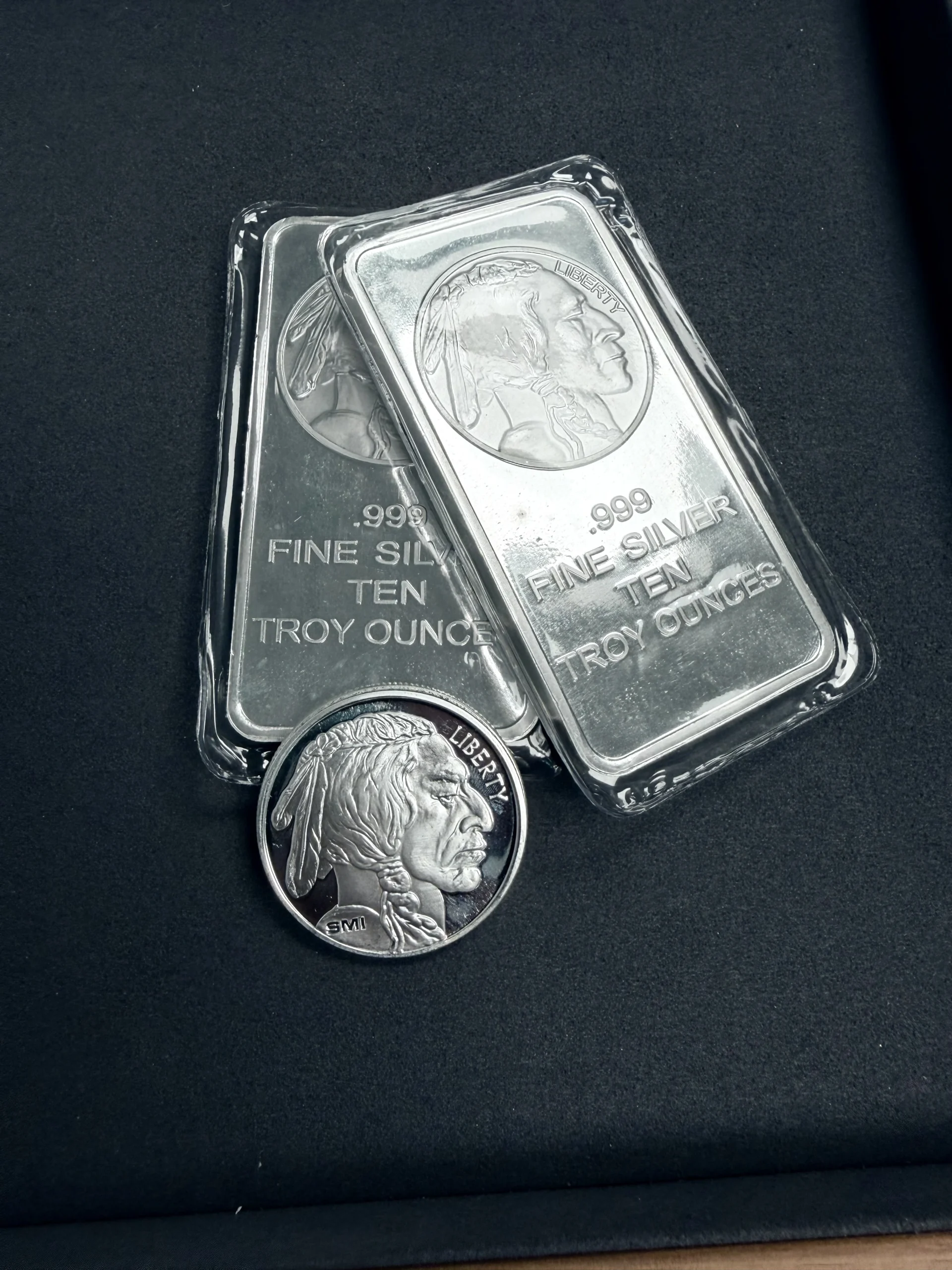
Why Gold and Silver Are Mathematical Responses, Not Emotional Reactions
Precious metals act as a mathematical hedge against debt-driven currency debasement. This isn’t just about fear or gut feelings. When debt-to-GDP ratios blow past key thresholds, fiat currency’s buying power drops through mechanisms that make physical gold and silver necessary in a portfolio.
Inherent Value Versus Paper Assets
Physical gold and silver have intrinsic value, no matter what any government or institution promises. Unlike bonds, stocks, or paper money, you can’t just create more of these metals with a keystroke or a law.
Paper assets depend on someone else doing what they said they’d do. A dollar bill is a Federal Reserve IOU. Bonds need issuers to pay up. Stocks depend on company profits and market mood.
Gold and silver don’t need any middlemen. Their value comes from scarcity and acceptance across the world. That difference matters a lot when debt levels make paper promises shaky.
The math is simple enough. When a country’s debt tops 90% of GDP, economic growth usually drops by about a third. At 126.5% debt-to-GDP, the U.S. is way past that line. Each new dollar of debt now buys only 20 cents of growth, down from 40 cents before 2020.
The Role of Precious Metals During Debt Crises
Precious metals preserve purchasing power when rising debt forces currency debasement. This isn’t about market mood swings—it’s math.
History shows a clear pattern. When governments print money to cover unsustainable debt, more currency chases the same fixed amount of gold and silver. That pushes up their prices, but their real value holds steady.
Look at Germany’s 1920s hyperinflation. An ounce of gold kept buying a nice suit, even as the paper mark collapsed. France saw the same in the 1790s, and modern Venezuela’s no different.
Today’s global debt—$280 trillion—creates similar pressure. Central banks have to keep interest rates near zero, or debt service costs will swamp government budgets. Bonds end up with negative real yields, and currency assets lose buying power bit by bit.
Physical gold and silver push back against this process, not because people are scared, but because their supply is fixed and they’re established monetary alternatives.
Physical Gold and Silver Versus Derivatives
Physical precious metals are a different animal from paper products like ETFs or futures contracts. That matters, especially when debt hits crisis levels.
Paper gold creates claims on metal that can far outweigh the real supply. Several people might “own” the same ounce on paper. ETFs could hold derivatives instead of actual bars. Futures contracts often just settle in cash.
With physical metals, you cut out the counterparty risk. If you’ve got allocated gold bars, you own the metal—not a promise. That becomes a big deal if financial stress starts breaking institutions that back paper claims.
Paper markets are leveraged and fragile during a crisis. Physical metals give you certainty that paper can’t. When debt forces governments to pick between default or inflation, physical gold and silver hold their value either way.
Debt Spiral Impact on Inflation, Interest Rates, and Markets
When debt outpaces revenue, governments have to make tough calls that ripple through inflation, interest rates, and markets. The U.S. government now spends close to $1 trillion a year just on interest—about 15% of federal spending in 2026.
How Excessive Debt Fuels Inflation
Governments with heavy debt often print money to keep up. When the Treasury borrows more just to pay interest, the Federal Reserve might expand the money supply to help out. That means more dollars chasing the same goods, so prices rise.
In 2025, the U.S. ran a $1.78 trillion deficit, spending $7.01 trillion but taking in only $5.23 trillion. The CBO projects a $1.9 trillion deficit for 2026. That constant borrowing puts pressure on the dollar’s value.
Countries in debt spirals rarely just default. Instead, their currency gradually loses value, making debts easier to pay back with cheaper money. It lightens the debt load, but everyone holding that currency pays the price through inflation.
Rising Interest Rates and Market Stability
High debt levels force governments to offer higher yields to attract bond buyers. In March 2026, the national debt hit $38.86 trillion. If investors get nervous about getting paid back, they want better returns.
The Treasury shelled out $11 billion a week in debt service during 2026. Higher rates mean bigger interest payments, which means more borrowing, which pushes rates up again—a nasty cycle.
Markets don’t like this. Volatility goes up. When confidence drops, investors pull money from long-term bets and look for safer or alternative assets.
Bond, Treasury, and Stock Market Vulnerabilities
The treasury market takes a direct hit when debt service costs climb. Bond prices drop as yields rise, hurting current bondholders. Foreign governments and big institutions might dump U.S. treasuries if they see the dollar weakening further.
Stock markets react to rate hikes and inflation worries. Higher rates make it pricier for companies to borrow, which cuts into profits and growth. During times of uncertainty, like the ongoing conflict with Iran, market sell-offs can pick up speed.
With high debt, rising rates, and geopolitical stress, traditional stock and bond portfolios can get squeezed from both sides. Assets that hold value during currency declines start looking a lot more attractive to folks trying to protect their wealth.
The Federal Reserve’s Challenge: Policy Limits in a Debt-Driven Era
The Federal Reserve is boxed in as U.S. debt servicing costs hit new highs, with interest payments now topping defense spending for the first time. These pressures make it tough for the Fed to raise rates without risking a refinancing crisis, which ends up favoring hard assets like gold.
Quantitative Easing and Monetary Policy Constraints
The Federal Reserve’s usual tools just aren’t packing the same punch as fiscal pressures mount. U.S. net public debt is closing in on 98% of GDP in 2024 and should top 100% in 2025, so the Fed has to juggle inflation control with the government’s refinancing needs.
Rising deficits push the Treasury to issue more debt, which floods the economy with liquidity. When the Fed hikes rates to fight inflation, government spending can blunt or even cancel out the tightening.
This makes inflation management through standard monetary policy a lot trickier. The debt servicing burden only adds to the headache.
Interest payments hit $728 billion in 2024, eating up 16% of government revenues. If rates stay high, those payments could balloon to $1.6 trillion by the end of the decade.
That sets off a nasty cycle—higher rates mean more expensive borrowing, which means even more debt issued at steeper yields. The Treasury faces a massive $10 trillion refinancing task in 2024 alone.
Much of the cheap, pre-pandemic debt now needs rolling over at much higher yields. This huge refinancing load pressures the Fed to keep rates lower than the economy might otherwise demand.
Fed Balance Sheet and the Case for Higher Gold Prices
The Fed’s growing balance sheet has a direct impact on gold prices. If the Fed can’t tighten policy without risking a debt crisis, it has to pick between fighting inflation and supporting Treasury markets.
When government debt ties the central bank’s hands, investors start looking for ways to protect their purchasing power. Gold tends to shine in these moments because it holds value and doesn’t depend on anyone’s promise to pay.
The Fed’s recent 50 basis point rate cut really highlights the fiscal problems lurking behind its usual inflation and employment goals. As debt-to-GDP ratios climb—166% over 30 years, if the CBO has it right—the Fed’s independence keeps shrinking.
Key monetary policy pressures:
- Social Security and Medicare could eat up 60% of federal spending by the end of the decade
- Letting tax cuts stick around would tack on $3 trillion in deficits over ten years
- Private companies have $2.5 trillion in loans to refinance by 2027, which adds even more market pressure
The Fed’s ability to hike rates or tighten policy keeps shrinking under these strains. Persistent deficits and limited tools make higher gold prices look more appealing as investors move away from debt-based assets.
Central Bank Gold Reserves and Global Trends
Central banks worldwide have stepped up their gold buying as U.S. debt issues get worse. They see the risks of fiscal dominance and worry about the dollar losing purchasing power.
The dollar’s role as the world’s reserve currency means U.S. fiscal problems ripple everywhere. If deficits and debt keep climbing, investor confidence could falter, pushing up risk premiums for U.S. Treasuries. That would raise borrowing costs at home and abroad, shaking up capital flows and financial stability.
Central banks add gold to their reserves to shield themselves from these big-picture risks. Gold doesn’t depend on anyone else’s promise, and it keeps its value even if currencies wobble.
The U.S. debt trajectory stands out compared to places like Japan (155-158% debt-to-GDP) and Italy (129%), whose debt loads have been pretty steady. U.S. debt shot from 40% of GDP in 1990 to nearly 100% today. Given how central Treasuries are to global finance, that’s a unique risk. Central banks are responding by piling into gold, keeping demand strong regardless of consumer or industrial trends.

Strategic Investing: Diversification With Metals in Modern Portfolios
Metals bring something special to a portfolio: low correlation with stocks and bonds, plus a knack for holding up when things get rocky. A strategic allocation can help with long-term growth and also guard against big financial shocks.
Diversification Principles in an Uncertain Economy
Gold and silver move to their own beat. When debt balloons and currencies lose ground, metals often head in the opposite direction from paper assets. This mathematical relationship means real portfolio protection—not just a hunch.
Allocating 5-15% of a portfolio to precious metals usually strikes a good balance. That range gives meaningful exposure without going overboard. The exact number depends on your risk comfort, time frame, and what else you own.
Physical metals, mining stocks, and ETFs all play different roles. Physical gold means you own it outright, no middleman. Mining stocks offer more upside if prices jump, but they come with company risks. ETFs are easy to trade and give you price exposure, but you don’t actually hold the metal.
Gold and Silver in Retirement Savings
Retirement accounts can really benefit from having some metals as a hedge against inflation and currency drops over the decades. You can put precious metals in a 401(k) or IRA through self-directed accounts or metal-backed ETFs. These options allow for tax-advantaged growth while keeping your portfolio diverse.
Silver trades at a much lower price than gold, so it’s easier to buy regularly. The gold-to-silver ratio helps investors spot which metal might be the better deal. If the ratio goes above 80:1, silver could have more room to run.
Rebalancing is key in retirement portfolios. As metal prices swing, adjusting your holdings keeps everything on target—no need for knee-jerk reactions. This steady approach helps lock in gains when prices spike and adds to your position when markets dip.
Risks and Opportunities in the Metals Market
Metals can be a wild ride in the short term. Gold might jump or drop 20-30% in a year, and silver can move even more. So, you really need a long-term view—think years, not months.
Storing physical metals isn’t free. Secure vaults charge annual fees, usually 0.5-1% of what you’re holding. Factor those costs in when comparing metals to other investments.
Today’s debt-heavy environment gives metals a real tailwind. When government debt tops GDP, metals have historically performed well. Central banks have snapped up record amounts of gold lately, which says a lot about how they see metals’ strategic value.
Global Shifts: De-Dollarization and Precious Metals Demand
Central banks are cutting back on U.S. dollar holdings and buying gold at record rates. They’re worried about currency weaponization, geopolitical risks, and whether the global financial system is really as stable as it seems.
De-Dollarization and International Financial Trends
De-dollarization is this slow move away from the U.S. dollar for trade, reserves, and transactions. It’s not a sudden collapse—it’s more of a steady shift triggered by certain events and choices.
The war in Ukraine really sped things up. When Russia’s dollar reserves got frozen overnight, central banks everywhere started rethinking currency risk. That episode showed reserves aren’t always as safe as people thought.
Central banks have been net buyers of gold since 2009, but the pace picked up lately. In 2024 alone, they added over 1,000 tonnes. China, Turkey, India, and Russia are leading the charge.
BRICS countries are working on their own payment systems and want to settle trade in local currencies. They’re trying to cut costs and avoid relying on the dollar. Gold fits right in as a neutral asset—no counterparty risk, accepted everywhere.
Foreign Treasury Demand and Shifting Alliances
Central banks are moving away from U.S. Treasuries and diversifying reserves. They’re uneasy about rising U.S. debt and want more control over their finances.
Countries are swapping Treasuries for gold at a historic pace. Gold can’t default, be frozen, or confiscated, which is a big deal for nations aiming to dodge geopolitical pressure.
This trend is changing demand for gold in a fundamental way. Central banks buy for strategic reasons, not just to chase prices. Their steady buying helps put a floor under gold, even when retail investors get nervous.
With BRICS growing, this shift is gaining speed. The bloc now makes up a huge slice of global GDP and population, so its monetary moves carry real weight worldwide.
Digital Assets, Crypto, and Metals Compared
Some folks see crypto as a rival to both fiat currencies and gold. But central banks have their own priorities.
Gold is tried and true—stable, liquid, and doesn’t rely on tech. It’s been money for thousands of years. Central banks like that they can store it physically and access it without worrying about internet outages or network hacks.
Crypto, on the other hand, faces regulatory gray areas, wild price swings, and tech risks. Most central banks exploring digital money are building their own CBDCs, not adopting existing cryptos.
CBDCs might make cross-border payments faster, but they don’t really fix the trust issues in fiat. Some authorities are floating the idea of gold-backed digital platforms. In that setup, gold and digital money could work together instead of competing.
Here’s the real difference: crypto challenges payment systems, while gold goes up against fiat as a store of value. They’re tackling different problems in the global financial system.
Frequently Asked Questions
Rising government debt shapes economic conditions that influence gold prices—think interest rates, currency values, and investor reactions. Knowing these links sheds light on why gold demand jumps when governments rack up more debt.
What economic indicators suggest investing in gold during a debt spiral?
The debt-to-GDP ratio is a big one, especially when government borrowing tops 100% of GDP. Interest payments on national debt versus tax revenue also point to financial stress.
If those payments eat up a bigger chunk of the federal budget, it squeezes government flexibility and raises default worries. Bond yields matter, too—when they rise, it means investors want more for the risk, especially if debt’s climbing fast or there’s doubt about repayment.
Currency devaluation is another clue. When debt gets heavy, governments sometimes let their currency slide, shrinking the real value of what they owe. Gold usually rises in value against a weakening currency.
How has historic gold performance correlated with times of economic uncertainty?
Gold soared during the 1970s stagflation, as U.S. debt and the dollar’s weakness took center stage. It jumped from $35 an ounce in 1971 to over $800 by 1980.
During the 2008 crisis, gold climbed from around $800 to $1,900 by 2011, with governments piling on debt to fight the downturn. The 2020-2021 period saw gold break above $2,000 as pandemic spending sent debt even higher.
These trends show gold tends to do well when economic stress and government obligations rise. Still, it’s not a guarantee—sometimes, other factors like real interest rates or currency strength can hold gold back, even in tough times.
What is the mathematical rationale for including gold in a diversified investment portfolio?
Gold doesn’t move in lockstep with stocks and bonds. When stock markets drop, gold sometimes holds steady or even climbs. This low correlation can help smooth out the wild swings in a portfolio.
Portfolio theory says it’s smart to mix assets that react differently to economic shifts. Gold earns its spot because it responds to different forces than stocks or bonds. Bonds mostly react to rates, stocks to company profits, and gold to bigger-picture stuff—like currencies and financial stress.
Most models land somewhere around 5-10% for gold in a portfolio. That range seems to lower risk without dragging down the returns too much. It’s enough to offer some protection, but not so much that you’re at the mercy of every blip in gold prices.
In what ways can gold act as a hedge against inflation and currency devaluation?
Gold tends to hold its purchasing power even when cash loses ground. If a government prints more money to cover debts, the currency usually gets weaker and inflation picks up. Gold, with its limited supply, often rises in value when that happens.
When governments let their currency drop in value, it makes their debts less painful to pay back. Foreign investors holding that debt lose out, but gold owners see gains when they measure it in the weaker currency.
The U.S. national debt is over $37 trillion now, and interest is eating up more of the budget. That puts pressure on the government to let the dollar slide or accept more inflation—both of which usually push gold higher against paper money.
Could an increased global debt lead to higher demand for gold investments?
Global debt has shot past $315 trillion, which has made a lot of folks nervous about whether countries can pay it all back. When several nations run into debt trouble at the same time, investors don’t have many safe places to go. That tends to push them toward gold, since it doesn’t rely on anyone else paying their bills.
Central banks have been buying more gold lately, partly because of these debt worries. Countries want reserves that other governments can’t mess with. Gold fits that bill, while government bonds just don’t.
Private investors are thinking along the same lines. As debt balloons everywhere, the risk of defaults or currency drops goes up. Gold offers a way out of the usual financial system, and that appeals to people looking for a safety net.
How do central bank policies influence the price and appeal of gold investments?
Interest rate decisions shape gold’s opportunity cost. When central banks hike rates, bonds and savings accounts suddenly look a lot better, so gold loses some of its shine.
If rates drop close to zero—or even go negative—gold starts to look more appealing since you’re not missing out on much yield anyway.
Quantitative easing programs usually support gold prices. Central banks pump more money into the system by buying government bonds with freshly created cash.
This extra currency floating around tends to spark worries about inflation or currency devaluation. Gold often benefits from those concerns.
The Federal Reserve deals with huge government debt. Raising rates means higher interest costs on that $37 trillion tab, which puts real pressure on the budget.
Because of this, the Fed can’t always push rates up to fight inflation. That limitation can push investors toward gold as a way to seek inflation protection.